
Entertainment
DeSean Jackson To Visit Auschwitz After Call With Holocaust Survivor

DeSean Jackson of the Philadelphia Eagles found himself at the center of a controversy last week when he posted a fake quote from Adolf Hitler which spoke about the economic empowerment of Jewish people. Jackson is adamant that he meant to say that black people should be doing the same thing, however, whenever you mention Hitler, you’re pretty well in the wrong. The wide receiver eventually apologized for the post and was fined by the Eagles.
Over the weekend, Jackson spoke with Holocaust survivor Edward Mosberg during a Zoom call. During their talk, Mosberg invited Jackson to visit Auschwitz which was the site of one of the most infamous concentration camps from that time. Jackson has accepted the invitation and even spoke about how sorry he is for what happened.
“I grew up in Los Angeles, and never really spent time with anyone from the Jewish community and didn’t know much about their history,” Jackson said during the call. “This has been such a powerful experience for me to learn and educate myself. […] “I want to take the proper steps to let people know that I never intentionally had any hatred in my heart, I never wanted to put the Jewish community down, I want to educate myself more and help bridge the gaps between all different cultures.”
While Jackson was certainly in the wrong, it’s dope to see him learn from his mistakes and have a dialog with a real survivor. These kinds of conversations can only help us grow.
[Via]












Celebrity
Lil Durk Co Defendants OTF Dede and David Lindsey Seek Acquittal and New Trial
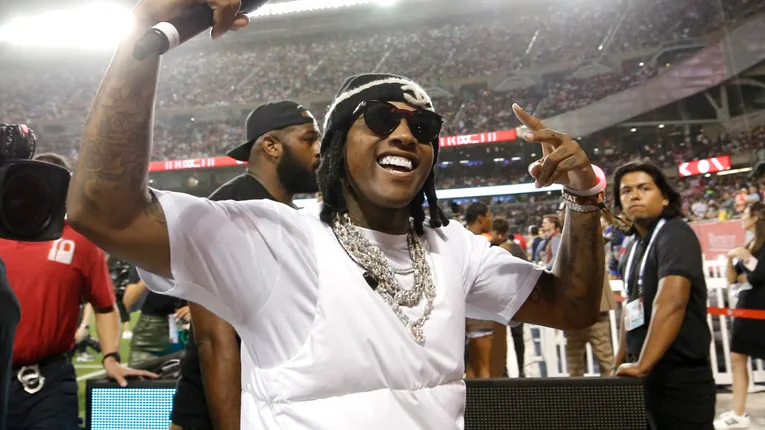
OTF Dede and David Lindsey are fighting their recent stalking convictions as the legal process in Lil Durk’s case continues to play out.
Lil Durk was facing five charges, two of them murder-for-hire related and three of them stalking related, while the two co-defendants were convicted on three counts of stalking in the same case. Durk was just cleared of all charges in that case a couple of weeks ago, but Dede and Lindsey didn’t get the same result.
The latest legal twist adds another chapter to a case that has remained tightly connected to Lil Durk’s ongoing legal troubles. Durk was acquitted in the initial murder-for-hire case, but his larger legal battle is far from over.
Read More: Meek Mill steps back from his ongoing feud with DJ Akademiks
For Dede and Lindsey, the immediate issue is their stalking convictions and whether the court will grant either of the new requests filed. The couple’s pleas carry long prison sentences, and the pending motions are especially important for their attorneys.
The court has not ruled on the Rule 29 and Rule 33 motions, leaving the next phase of litigation uncertain.
Lil Durk, meanwhile, is set to appear in court on November 4 for a bond hearing. His trial in the VICAR case was scheduled for the next few weeks, but it is likely to be delayed.
Separate legal proceedings are now moving forward in the cases of Durk, Dede, and Lindsey, who remain active. Dede and Lindsey’s latest filings ensure that the group’s legal saga continues even after Durk’s acquittal in the original case.
Celebrity
Meek Mill steps back from his ongoing feud with DJ Akademiks,
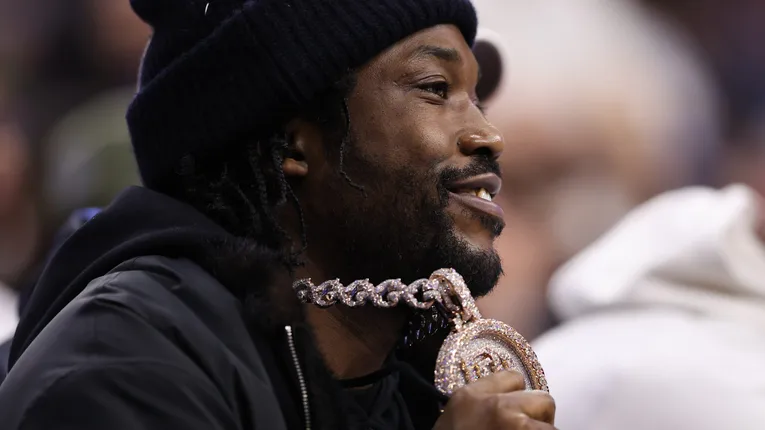
Meek Mill and DJ Akademiks’ ongoing social media beef has taken another turn, with Meek seemingly getting the last word.
The two have been feuding for around a decade, and their tensions have become closely tied to the fallout from Meek’s beef with Drake. Following Akademiks taking Drake’s side in the public feud, Meek clearly didn’t want to be featured on Akademiks’ page. Since then, they have exchanged occasional messages and renewed disagreements.
The latest chapter heated up around the Lil Durk trial. Meek Mill called out Akademiks for his coverage and commentary on the case, saying he had become a bad influence on the culture.
Read More: Lil Durk Turns to Malcolm X as Bond Hearing Looms
Akademiks fired back hard, and the beef snowballed into a back and forth of threats between the two. At one point, Meek asked for Akademiks’ address, while Akademiks showed off an arsenal of machine guns and rifles. The confrontation had been really serious before apparently cooling off in recent days.
The message is the latest chapter in a long-running feud that has flared up several times over the past decade. This latest back-and-forth could be Meek’s attempt to close the door on the feud, but given the history between the two, tensions can flare up fast.
So far, it looks like Meek is putting a line under his part of the conversation. Only time will tell whether Akademiks responds.

-

 Artist Spotlight6 days ago
iLLLACAT brings sharp bars and catchy production with latest release “Like Dat”
-

 Artist Spotlight6 days ago
Joshua Jamison unveils intimacy and a full rock expression on latest release “Windows”
-

 Artist Spotlight6 days ago
ALPHA CENTAURI blends hip-hop, funk and afrobeat ambition on latest release “The Future Right Now”
-

 Artist Spotlight6 days ago
Emilie Thorsby turns self-belief into a bold musical statement with latest release “Amazing as hell”
-

 Artist Spotlight5 days ago
Amanda Fagan unveils lost love and regret on latest release “Forever Yearn”
-

 Artist Spotlight6 days ago
UNDAUNTED unveils broken memories with latest release “Shattered Echoes”
-

 Artist Spotlight1 day ago
“NO MORE” by Amanda Holley connects healing, awakening, and survival
-
 Artist Spotlight1 day ago
“Subterranean Homesick Blues” finds a new direction through Ghost of Panama