
News
Keith Richards’ Guitar Legends to $500 Million Net Worth

Keith Richards, the legendary guitar player and founding member of The Rolling Stones, has carved an unforgettable mark on rock history through his raw and rebellious guitar riffs and a career with a staggering net worth of $500 million. From the smoke-filled joints of London to the high-profile superstardom sold at the world’s biggest arenas, his story is a manual example of how musical talent, hard work, and business savvy combine to form one of rock ‘n’ roll’s most indelible legacies.
Richards’ path to financial success was paved with the birth of The Rolling Stones, a band he helped launch with Mick Jagger and Brian Jones in 1962. Richards’ unique rhythm guitar playing, steeped in blues and early rock influences, soon became the band’s calling card. While many guitarists sought technical perfection, Richards based his work on feel, groove, and soul. His spare, gritty approach based around open G tunings and a notoriously muted sixth string produced some of the most recognized riffs in music history, including “(I Can’t Get No) Satisfaction,” “Start Me Up”, and “Brown Sugar.” These songs not only defined generations but brought in millions in royalties.
Songwriting is one of the big pillars of Richards’ fortune. Richards created one of music’s most successful songwriting duos with Mick Jagger. Together, they have collaborated on dozens of chart-topping hits that bring in royalties decades after they were released. And every time a Rolling Stones song is streamed, played on the radio, used in a film, and covered by another artist, Richards receives a cut of the royalties. That long tail of steady revenue stream has been vital to preserving his wealth over time and during a time period in which the sales of physical albums have all but disappeared.
Check out this article: Snoop Dogg and Dr. Dre’s Long-Awaited Album Collaboration “Missionary” will officially launch in December!
Richards’ wealth has also been fueled massively by touring. The Rolling Stones are famous for their sprawling, sold-out world tours, routinely taking in hundreds of millions of dollars a tour. As a core group member, Richards has also received many sales revenues for tickets, merchandise, sponsorship deals, and licensing. The band’s ability to draw fans of all ages has fueled high demand for live performances, making them one of the highest-grossing touring acts in history. Unlike many artists whose output dwindles with age, Richards and the Stones have still been touring consistently deep into their seventies, underscoring the durability of the brand they have created.
Beyond The Rolling Stones, Richards has released solo albums and collaborated with other music acts, cementing his identity beyond the band. And while his solo albums, such as Talk is Cheap and Main Offender, have not been as commercially gargantuan as his Stones efforts, they still add to his brand and fortune. His credibility as a musician has allowed him to remain relevant across several decades of music, providing him leverage in multiple facets of creative and business opportunities.
Over the years, he has broadened his income through smart investments, real estate, and publishing. He has multiple residences worldwide, and his estates in the U.S. and the U.K. have substantially increased in value. In 2010, he wrote a best-selling memoir, Life. The book netted millions in sales and cemented his status as a gritty, honest, and foul-mouthed cultural lodestone. This invasion into publishing opened another revenue stream and deepened his relationship with fans and the media.
Another underrated part of Richards’ money-making empire is his branding power. One of the most recognizable symbols in popular culture is the Rolling Stones’ famous tongue and lips logo. Licensing that logo for merchandise, everything from apparel to collectibles produced a steady source of revenue. Richards’ industry-defying, authentic personality is a big part of the brand, and these products sell well across generations.
Check out this article: Dukes Of Roots flip Pink Floyd’s ‘Money’ into a reggae masterpiece
Also, Richards’ long-term presence in the business has made him a presence in an industry known for burnout and short-lived fame. His long survival through substance abuse, legal woes, and the natural vicissitudes of aging has become a legend in itself, lending charm and intrigue that enrich his public persona and market value.
Keith Richards’ $500 million net worth is a temporary phenomenon, but it is a reward for several years of welcome, endurance, and clever organization methods. This is because Richards is the kind of guy whose life is beyond writing classic songs and selling out stadiums. He makes smart investments and expands his brand. His story is a masterclass in how to build wealth out of creativity, resilience, and an unwavering commitment to one’s artistry.

Celebrity
Eminem’s music publisher sues Suno for $41 million in a copyright case over AI music.
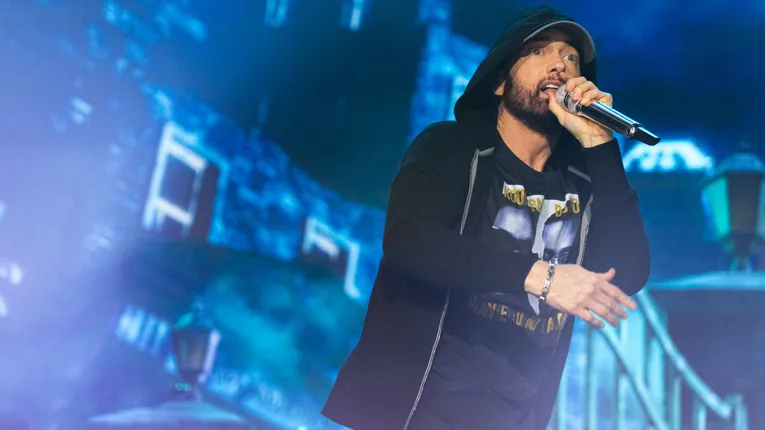
Eminem’s music catalog is at the center of a new legal battle over artificial intelligence, with his publisher, Eight Mile Style, reportedly suing AI music company Suno for $41 million. The lawsuit alleges the company used copyrighted recordings of the Detroit rapper without permission to train its generative music model. Eminem is not said to be named as a plaintiff. Still, the case puts rights associated with some of his most famous compositions at the center of an ongoing debate over how AI companies use existing music.
The lawsuit was filed in federal court in San Francisco, according to AllHipHop. Suno is accused of using copyrighted content from Eminem’s catalog to train its model, and the generated output allegedly resembles his work, according to Eight Mile Style. The publisher reportedly has the rights to 269 of the rapper’s compositions, including “The Real Slim Shady,” “Lose Yourself,” and “Stan.”
The suit lists financial demands, including $150,000 for each composition, and $672,000 concerning the alleged removal of copyright information. The total amount being sought is said to be $41 million. That figure, however, is what the plaintiffs are seeking in damages, and is not to be confused with a sum that has already been awarded in court. The allegations and demands in the lawsuit are only allegations in an ongoing legal dispute.
In a statement made to Billboard, Suno has responded to the accusations. “The company said its purpose is to help people create new and original music, not capitalize on an artist’s name or likeness. It also said it bans unauthorized use of an artist’s work and does not allow prompts that ask for specific artists’ names and songs.
The company said it also uses third-party providers to scan uploaded audio files and lyrics for possible misuse. Suno said the measures are part of an effort to strengthen protections for artists and users, and that it plans to roll out more safeguards. It offers a different description of how the platform handles copyright issues, while the Eight Mile Style lawsuit challenges whether those protections are adequate.
The dispute raises a complicated question for the music industry: how should copyright law apply to generative artificial intelligence systems trained with existing creative works? The problem is even more difficult when a platform can generate new material that purports to imitate the style or sound of an established artist. Legal battles over AI-generated music, including those involving Suno and others, are one example, such as the one with Eminem’s publisher.
It also raises questions about the relationship between copyrighted recordings, training data, and the material users create through AI platforms. It doesn’t solve those problems of distinguishing the training process from the final output. They are part of the broader legal issues that are fought over in cases like this.
Meanwhile, Eight Mile Style is currently pursuing significant damages for the alleged use of Eminem’s compositions. Suno maintains it has policies and screening mechanisms in place to prevent unauthorized use. The court will need to process the claims according to the law. Until then, the $41 million figure is what is being sought, not a confirmed judgment.
Hip-Hop
Lil Baby’s ‘FRESH’ Bows With 6.1 Million Spotify Streams As Debut Numbers Turn Heads
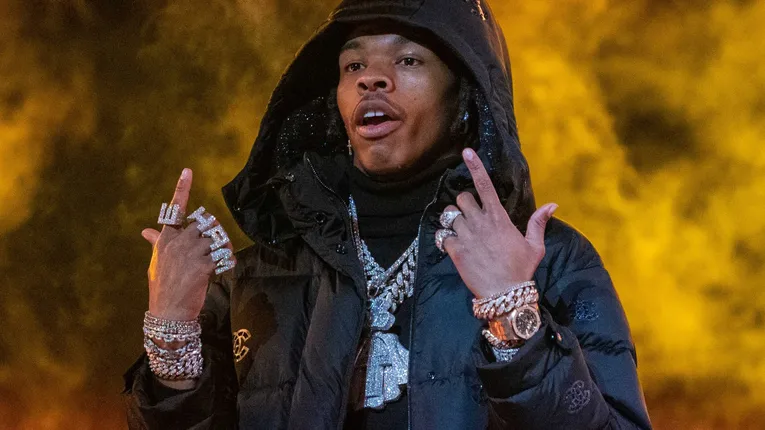
Lil Baby’s latest album “FRESH” is already generating buzz beyond music, as its first full day of Spotify streams turns heads among fans and hip-hop commentators. While many listeners have expressed excitement about the new project, its early commercial performance is reportedly falling short of the numbers associated with some of the Atlanta rapper’s past releases. While the numbers offer an early indication of how the album is performing, they don’t tell the full story of how it’s being received across streaming platforms.
According to numbers shared by Kurrco on Twitter, “FRESH” pulled in about 6.1 million Spotify streams in its first full day of release. That works out to about 356,000 streams per song across the album’s tracklist. The overall total is a first measure of how active your listeners are, but individual track performance shows which songs are getting the most attention so far.
Besides “Dead Fresh,” which had already been released as a single, “Mr. Do Something” is said to be leading the project on Spotify. At the time of reporting, the track had amassed approximately 882,000 streams. Next up is “All My Partners,” featuring Rylo Rodriguez, Future, and Young Thug, which reportedly had 571,000 streams.
Those numbers put the two tracks ahead of the rest of the album’s reported streaming performance, at least in the initial period being discussed. But these numbers are still early and should not be taken as a final judgment on the project’s commercial outcome. Streaming activity can continue to develop after release day, especially as listeners spend more time with a full album and decide which songs they want to revisit.
The mixed reception of “FRESH” has also fueled the conversation. Some fans are happy with the project, but others have been more critical of its direction. Lil Baby has taken to social media to respond to negative comments about the album, showing he is aware of the conversation around his latest release.
The reaction highlights the different ways listeners are engaging with the project. Some are judging it mostly on its music, while others are watching closely for its commercial success. “Streaming numbers are often sucked into the larger conversation about how relevant an artist is and how a new project is doing in online hip-hop discussions these days.
Lil Baby’s reported 6.1 million first-day streams on Spotify are an early sign of how “FRESH” is resonating with listeners on the platform. Still, consider the numbers alongside the album’s reception elsewhere and results over a longer period. It’s also a first look at which songs are gaining traction, based on the performance of “Mr. Do Something” and “All My Partnas.”
As the album continues its run, the focus will probably stay on whether its streaming numbers are increasing and how its overall performance stacks up against expectations. “FRESH,” for now, has launched with about 6.1 million Spotify streams in its first full day, leaving fans and critics with plenty to talk about.

-
 Artist Spotlight4 days ago
Stephanie Porter unveils the admiration and happiness with latest release “He Thinks That I’m Wonderful”
-

 Artist Spotlight4 days ago
Stephani Ezatoff honors Elvis Presley’s legacy on powerful new single “Run On”
-

 Artist Spotlight4 days ago
Alwyn Morrison explores betrayal, judgment, and survival on new EP “Trial”
-

 Artist Spotlight4 days ago
Fanny Alexandra explores emotional recovery and self-discovery on “Ceasefire”
-
 Artist Spotlight5 days ago
Boy Sim explores heartbreak and self-deception on “Cloud Nine”
-
 News5 days ago
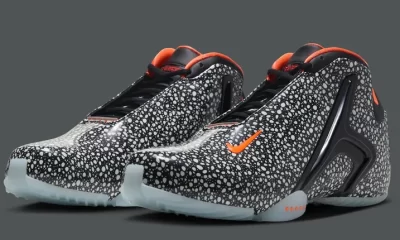
Nike Zoom Hyperflight “Safari” Official Images Reveal Bold Print Ahead of Holiday Release
-

 Artist Spotlight4 days ago
Kay Onishi drops dark synth-trap banger on latest release “30 SECOND RULING”
-

 Artist Spotlight5 days ago
C’batch explores love, irony, and poor decisions in “If There Was Ever a Fool (One of a Cast of Many) 1”