
Celebrity
DJ Vlad Challenges Boosie Badazz Over Federal Gun Case
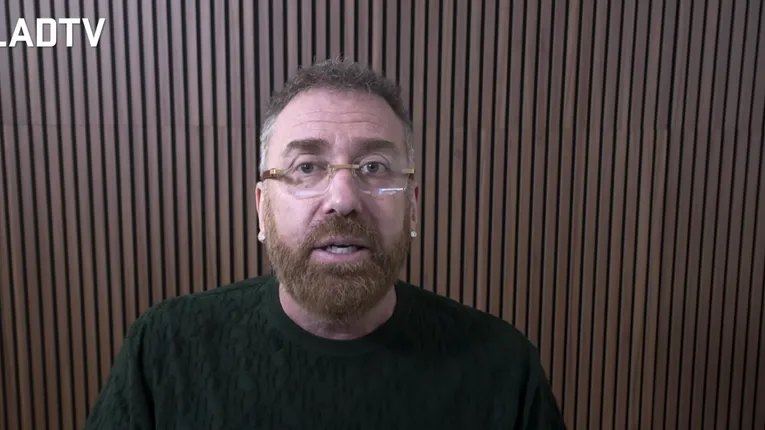
DJ Vlad is taking his beef with Boosie Badazz to the next level, asking whether the rapper’s behavior in his federal gun case matches the anti snitching code he’s long imposed on others in hip hop.
In a new clip for VladTV, Vlad looked back at Boosie’s federal gun case and pointed to court documents he says show the rapper from Baton Rouge shifting blame onto his security guard. Vlad said the paperwork runs counter to Boosie’s long track record of publicly denouncing rappers he believes are snitching to authorities.
The latest row is another sign of an already frayed relationship. Boosie has been one of VladTV’s most frequent interview guests. Still, their relationship has soured over the years over issues involving interview payments, business dealings, and, most recently, Boosie’s push for a presidential pardon.
The pardon controversy has become a major part of the ongoing public beef between the rappers. Boosie reportedly paid $600,000 to two lobbyists, Jack Burkman and Jacob Wohl, to lobby President Donald Trump for a pardon in his federal gun case. When the pardon didn’t come through, Boosie accused them of misleading him and demanded $300,000 back. Burkman and Wohl have denied scamming Boosie, saying they were hired to advocate for him, not to promise a pardon.
Read More: Aubrey O’Day Reacts After Former Diddy Staffers Reportedly Join Usher’s Team
Boosie went on 60 Minutes to discuss the issue, which brought more attention to the situation. He later complained about how the interview was portrayed and released purported messages involving the lobbyists while defending himself against claims his actions were snitching.
Vlad is now using the controversy to call Boosie out on a principle that has been a major talking point in the rapper’s public commentary. Vlad mentioned Boosie’s situation as part of other past hip-hop discussions he’s had with Gunna, Young Thug, T.I., and Gucci Mane.
“The court documents for Boosie’s federal gun case are another point of contention for Vlad. His case hinges on whether the rapper’s alleged remarks about his security guard should be measured by the same yardstick Boosie has used to measure other artists. The charge is particularly noteworthy as Boosie has cultivated a strong public persona against what he considers snitching. With that history, the latest exchange with Vlad is more personal, adding to a complicated fallout between the two.




Celebrity
Eminem’s music publisher sues Suno for $41 million in a copyright case over AI music.
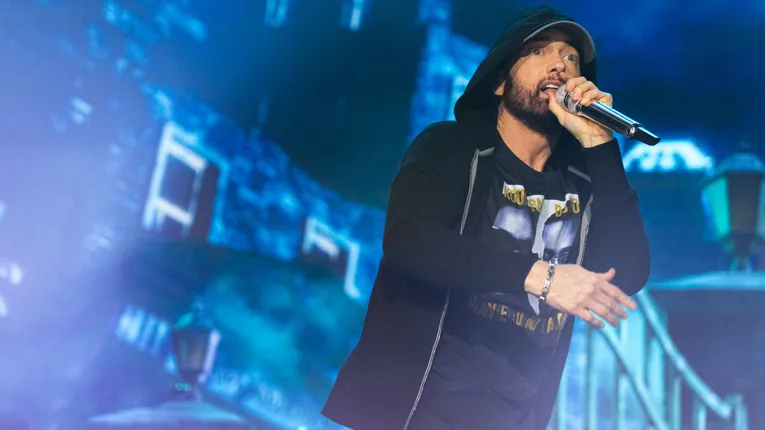
Eminem’s music catalog is at the center of a new legal battle over artificial intelligence, with his publisher, Eight Mile Style, reportedly suing AI music company Suno for $41 million. The lawsuit alleges the company used copyrighted recordings of the Detroit rapper without permission to train its generative music model. Eminem is not said to be named as a plaintiff. Still, the case puts rights associated with some of his most famous compositions at the center of an ongoing debate over how AI companies use existing music.
The lawsuit was filed in federal court in San Francisco, according to AllHipHop. Suno is accused of using copyrighted content from Eminem’s catalog to train its model, and the generated output allegedly resembles his work, according to Eight Mile Style. The publisher reportedly has the rights to 269 of the rapper’s compositions, including “The Real Slim Shady,” “Lose Yourself,” and “Stan.”
The suit lists financial demands, including $150,000 for each composition, and $672,000 concerning the alleged removal of copyright information. The total amount being sought is said to be $41 million. That figure, however, is what the plaintiffs are seeking in damages, and is not to be confused with a sum that has already been awarded in court. The allegations and demands in the lawsuit are only allegations in an ongoing legal dispute.
In a statement made to Billboard, Suno has responded to the accusations. “The company said its purpose is to help people create new and original music, not capitalize on an artist’s name or likeness. It also said it bans unauthorized use of an artist’s work and does not allow prompts that ask for specific artists’ names and songs.
The company said it also uses third-party providers to scan uploaded audio files and lyrics for possible misuse. Suno said the measures are part of an effort to strengthen protections for artists and users, and that it plans to roll out more safeguards. It offers a different description of how the platform handles copyright issues, while the Eight Mile Style lawsuit challenges whether those protections are adequate.
The dispute raises a complicated question for the music industry: how should copyright law apply to generative artificial intelligence systems trained with existing creative works? The problem is even more difficult when a platform can generate new material that purports to imitate the style or sound of an established artist. Legal battles over AI-generated music, including those involving Suno and others, are one example, such as the one with Eminem’s publisher.
It also raises questions about the relationship between copyrighted recordings, training data, and the material users create through AI platforms. It doesn’t solve those problems of distinguishing the training process from the final output. They are part of the broader legal issues that are fought over in cases like this.
Meanwhile, Eight Mile Style is currently pursuing significant damages for the alleged use of Eminem’s compositions. Suno maintains it has policies and screening mechanisms in place to prevent unauthorized use. The court will need to process the claims according to the law. Until then, the $41 million figure is what is being sought, not a confirmed judgment.
Celebrity
Ice Cube And Dr. Dre Discuss The Behind-The-Scenes Fights That Made “Straight Outta Compton”
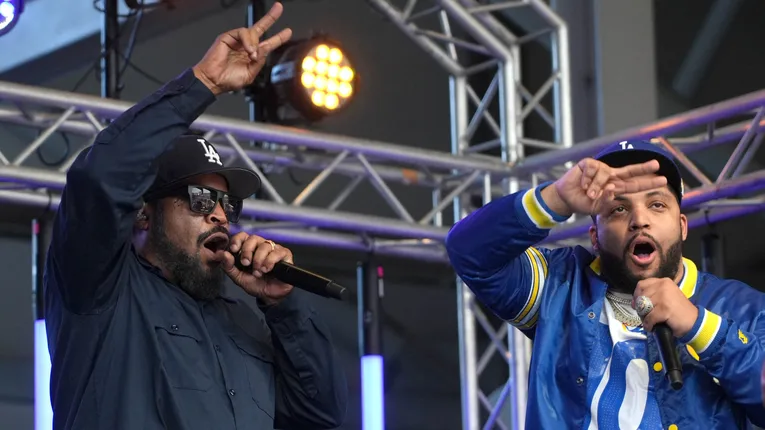
More than 10 years after “Straight Outta Compton” turned N.W.A.’s story into a big-screen hit, Dr. Dre and Ice Cube are looking back on the challenges of turning the group’s history into a feature film. On Dre’s recent appearance on Listen & Laugh, the new podcast hosted by Cube and Mike Epps, the topic of musical biopics came up, and the difficult decisions that led to the 2015 film. Their discussion highlighted the difficulty of fitting the group’s story into a limited time frame while still giving its members adequate representation.
“Straight Outta Compton” dramatized the rise of N.W.A., featuring Dre, Cube, Eazy-E, MC Ren and DJ Yella. While the film got the group’s story to a wider audience, Cube said the process involved difficult conversations with the movie company. The main issue was how to devote enough time to the different characters when the film had to cover some ten years of events in just two hours.
According to Cube, the filmmakers disagreed about the roles of Ren and Yella, and they didn’t want to give them any lines. “Those two cannot be just background characters,” he said. For Cube, the group’s identity meant recognizing all its members, not just the most prominent characters. His remarks hinted at the creative and representational questions that can arise when a film tries to tell the story of a group with many prominent personalities.
Dre also touched on the difficulty of even making a biopic, addressing his comments to the executives working on the project. His answer highlighted the frustration of seeing members of N.W.A. possibly pushed into the background of a movie about the group’s history. The discussion made it clear that the challenge was not only what events to include, but how to portray the people who helped shape them.
“There are practical limits to what filmmakers can do with a complicated story,” Cube said. “It’s difficult to keep up with five characters and give each person a full backstory in one movie,” he said. That constraint can be a delicate balancing act; audiences need enough background to know who they’re dealing with, but the film also has to hold together a cohesive central story.
But Cube said N.W.A. posed a special challenge because fans cared about the whole group. He felt it was important not to make anyone seem like a nobody, as the audience felt a connection to the members. The talk also highlighted the behind-the-scenes work, much of which viewers never see in the finished movie.
Their conversation reminds us that music biopics involve more than recreating famous moments or documenting an artist’s rise. Choices about screen time, character development, and historical representation can become major sites of negotiation. For Dre and Cube, making “Straight Outta Compton” was about dealing with those pressures while still trying to keep N.W.A. as a major group. The film landed in theatres in 2015, but their comments indicate that the work that went into telling its story is still worth talking about.

-

 Album Review6 days ago
Legends of the Seven Golden Vampires explore healing and personal growth on “The Pumphouse of Broken Dreams” [album]
-

 Artist Spotlight6 days ago
Ricky’s Rebel Rabble honor family and remembrance through “Molly”
-
 Artist Spotlight6 days ago
for KING & COUNTRY celebrate faith and everyday joy on “the most beautiful colours”
-
 Artist Spotlight7 days ago
T1M1 featuring Keybeaux confront artificial creativity with latest release “Hip Slop”
-

 Album Review6 days ago
Brynja Rán finds clarity in complicated relationships on “Unblurred” [album]
-
 Artist Spotlight7 days ago
Lil Bales unveils a love bomb on latest release “Rust”
-

 Artist Spotlight4 days ago
Boy Sim explores heartbreak and self-deception on “Cloud Nine”
-

 Artist Spotlight3 days ago
Stephanie Porter unveils the admiration and happiness with latest release “He Thinks That I’m Wonderful”