
Story
Ice Cube’s CWBA (Contract With Black America): Everything To Know
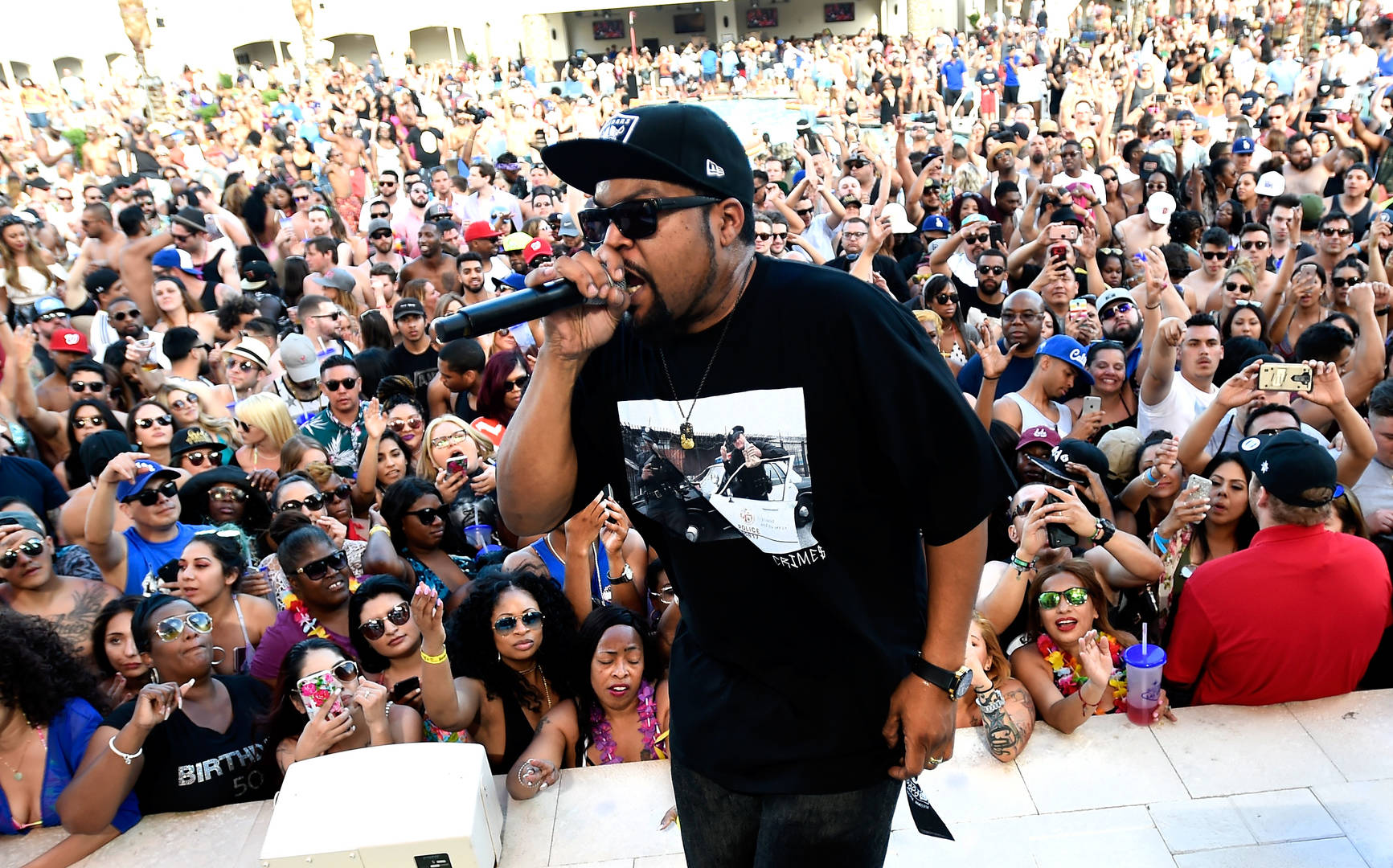
Southern Californian rapper/actor, Ice Cube, recently came under fire for his collaboration with the Trump re-election campaign in seeking to cater to African-American voters.
His ongoing advocacy now occurs with fewer than two weeks remaining until a highly contentious Election Day in the United States.
President Trump has faced a troubling record with race during his short time in politics, with critics taking note of his role in promulgating the conspiracy theory that then-president Obama was secretly a Muslim Kenyan-born agent who illegitimately assumed the presidency, his frequent disinclination to denounce white supremacy, and his open opposition to the legislative advancement of civil rights.
David Becker/Getty Images for Daylight Beach Club
Ice Cube has long been associated with the more anti-institutionalist flanks of the political sphere, as he is perhaps best known for decrying racial bias and police violence by penning the 1988 N.W.A song, “Fuck tha Police.”
His reinsertion into the political scene comes just as racial tensions reach a potentially once-in-a-generation high, wedged between the death of George Floyd at the hands of police, and a pivotal presidential election.
Ice Cube’s most recent response has been the issuance of what he calls a “Contract With Black America” (CWBA), a set of guidelines aimed at fundamentally altering governmental leadership as it relates to the black community in America.
What’s in the CWBA?
The CWBA contains an introduction and thirteen ideological tent poles to the major structural reform designed to grant equality to the black community on the basis that an “immoral devaluation of Black lives has been ingrained in America’s political economy and is long overdue for a reckoning.” The thirteen points include everything from “Representation” to “Prison Reform” and “Judicial Reform” and more (listed in full below).
This was specifically according to the contract’s author, Darrick Hamilton, Professor and Executive Director of the Kirwan Institute at Ohio State University.
On August 22nd, Ice Cube tweeted a video with the caption, “But what’s in it for us.”
In the video, he asserted that politicians did not deserve the electoral support of black people without first signing the CWBA.
He stated, “Democrats don’t seem like they got a plan. Republicans don’t seem like they got a plan for us. So how the hell you gonna vote for them?”
CWBA Contract Points:
1. Representation
2. Lending Reform
3. Federal Funding
4. Federal Reserve
5. Finance Oversight
6. Data & Credit
7. Prison Reform
8. Judicial Reform
9. Police Reform Act
10. FCC Licensing
11. Confederate Institutions
12. AJP Program
13. Black Responsibility
Breaking Down the CWBA
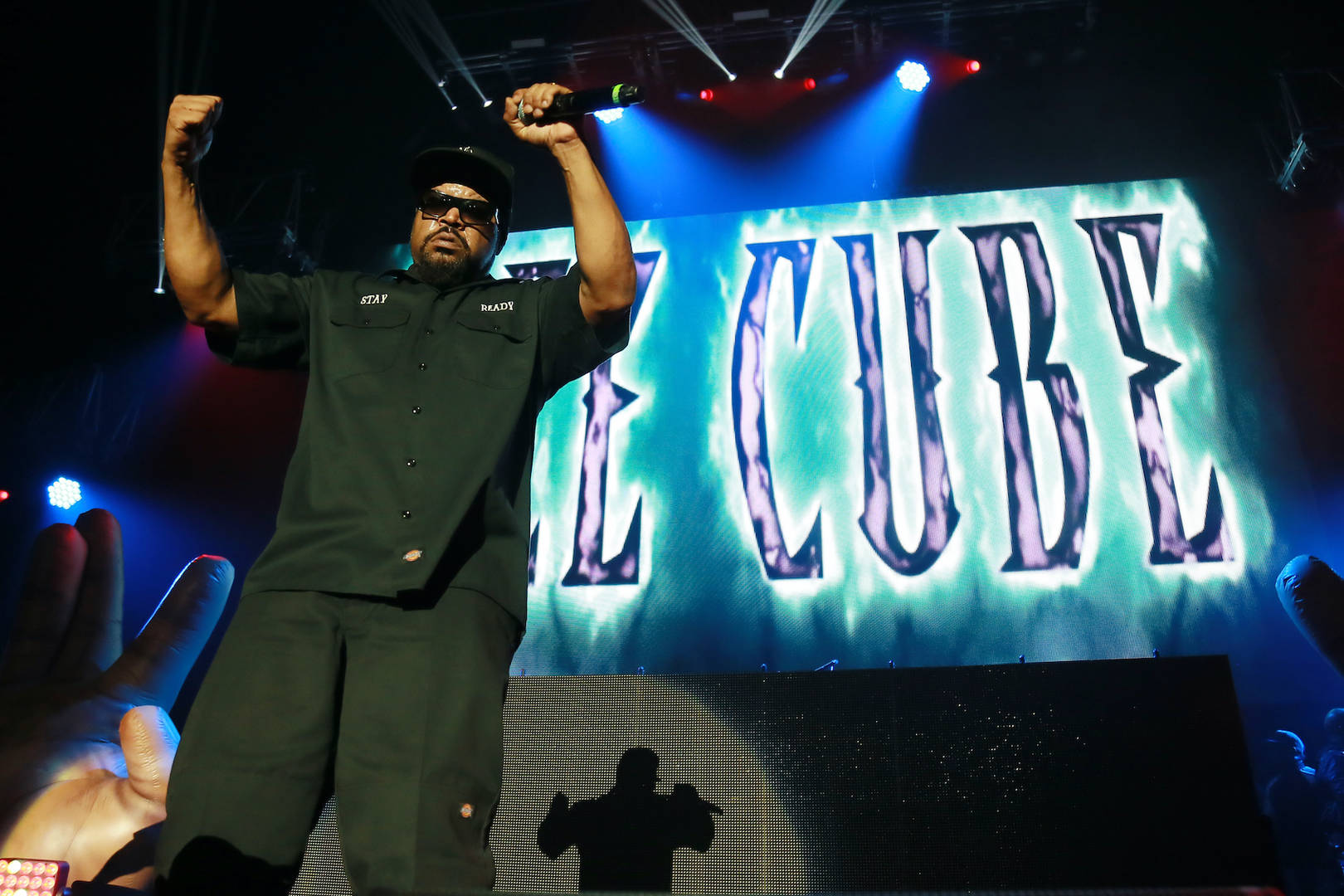
Leon Bennett/Getty Images
The CWBA addresses generations-long tacts of racial discrimination against people of color, most notably including those seen in the Justice System and economic hardships.
Possibly its most consequential requisites are those calling for “Massive Bank Lending and Finance Reform” and “Neo-Reconstruction,” which would seek to continue upon the 1867-1877 Reconstruction Era after the Civil War, in which blacks slowly began being incorporated into society as fellow Americans, and not property. Beyond that, as it’s detailed under “Representation” the website for CWBA:
“Additionally Black opportunity and representation will include: Affirmative Action in schools public and private; per student funding in states on an equal basis instead of paid by local property taxes; Black representation on all government civil rights bodies; civil rights classes mandatory in elementary schools; Gerrymandering reform; additional polling places in Black and minority neighborhoods; Juneteenth to become a Federal holiday.”
As far as the “Federal Funding” is concerned, the proposal reads:
“Pass federal program providing every child with a government funded trust account at birth starting with a $1,000 contribution. As proposed by Senator Booker and Representative Pressley, accounts to be managed by the Treasury and only those born into lower-wealth families would receive more contributions each year up to $46,500 total. At age 18 access to the funds allowed but use restricted to asset enhancing actions such as buying homes, starting businesses and funding education.”
This goes hand-in-hand with proposals for “Lending Reform” and “Federal Reserve,” the latter of which would allow for a one-time interest-free loan for those seeking to buy a home, and the former would require the banks to lend “a percentage of all loan and credit categories on an equal basis to the Black population each Bank serves.”
Under “Prison Reform,” the demand includes that all privately-run prisons are to be abolished, prison labour must be consensual, and all those locked up for a crime involving marijuana to be freed.
“Judicial Reform” would include the abolishment of mandatory minimums and the three-strike rule, and would also include the the declaration of the Klu Klux Klan as a terrorist group, and lynching categorized a federal hate crime.
Finally, the “Police Reform” would first and foremost include the elimination of qualified immunity, but beyond just that, the demands include:
“Requirement of mandatory malpractice insurance for police officers; make municipalities liable for unconstitutional actions by police; mandatory use of dashboard and body cams; elimination of chokeholds and “no-knock” warrants; establishment of residency requirements, de-escalation training, and requirement to update training; severe penalties for evidence tampering including withholding DNA. A federal database of police and disciplinary records established and made public and once fired for cause cannot be rehired. Creation of Office of Independent Prosecutors to solely focus on prosecuting police accused of wrongdoing.”
The proposals are potentially pragmatic ideals with a historical context of success that could aid legislative passage.
Some, such as the hosts of Fox Soul’s The Queens, have noted that the CWBA does not make ample effort to address the specific needs of intersectional African-Americans.
For instance, there is no specific mention of black members of the LGBT+ community or black women. The show’s panel of all-black women took note of the latter.
Ice Cube responded to the apparent concern of black women being excluded by saying, “You are mentioned. When you mention Black people you mentioning Black women, so don’t count yourself out.”
Who Does Ice Cube Support?
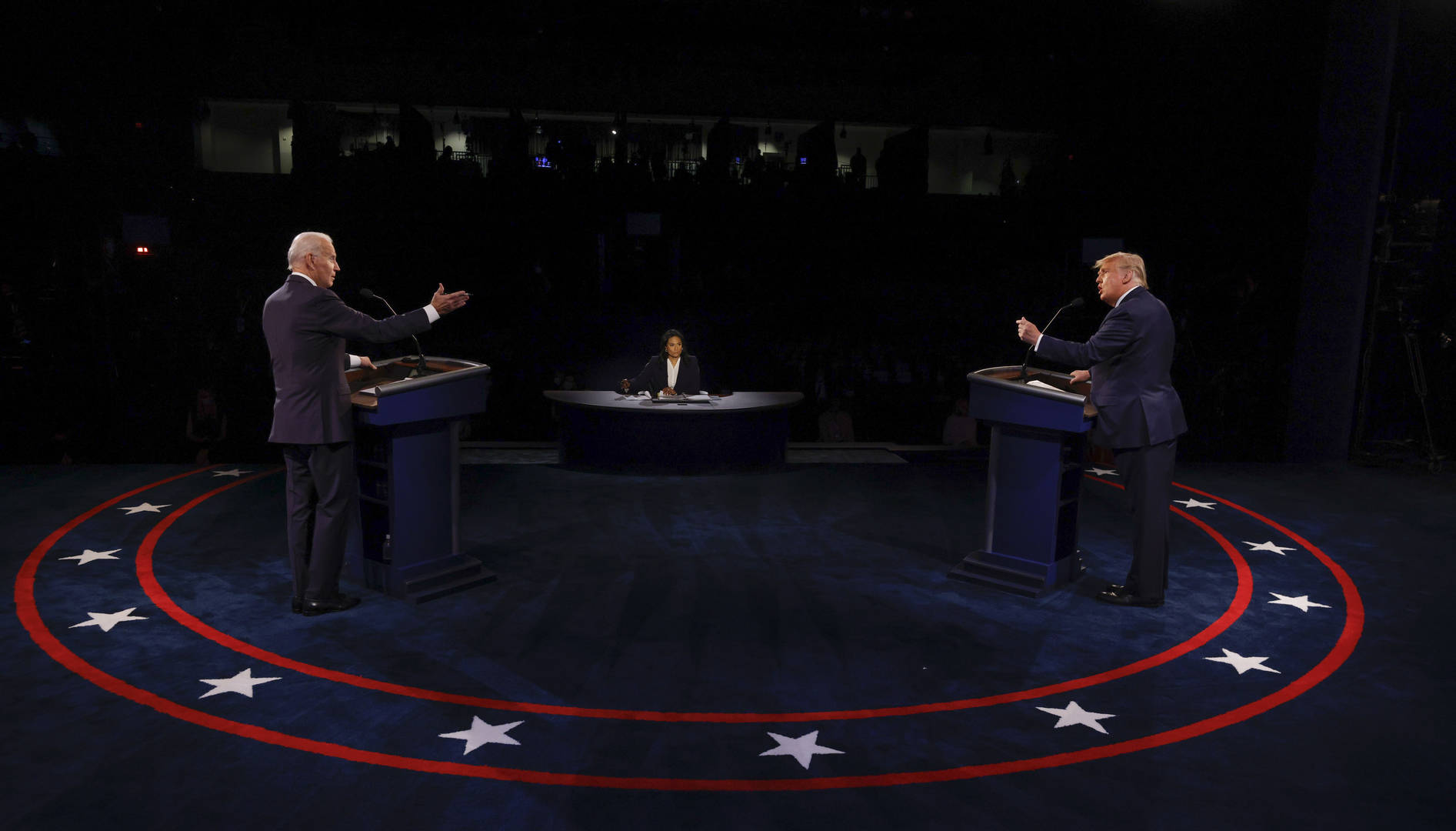
Jim Bourg-Pool/Getty Images
While his best-known political statements involve criticism of police brutality and recognizing mass incarceration rates of African-Americans in the ’90s, Ice Cube has most recently come under fire for meeting with the re-election campaign of Donald Trump, who he famously referred to in his 2018 album, Everythang’s Corrupt, by saying, “Arrest the President, that n***a is Russian intelligence”.
The decision to work with the Trump campaign on a “Platinum Plan” for Black Americans was broadly panned online, with CNN even reportedly canceling his appearance on Cuomo Prime Time. He defended himself by asserting, “Black progress is a bipartisan issue”.
Even among those with moderate feelings of agreement toward the decision had some harsh words, as echoed by Malaika Jabali of The Guardian, who stated, “Conservatives gleefully use Cube’s message to prop up Trump. Liberals largely dismiss Ice Cube as a race traitor without sitting with his concerns.
“And Ice Cube defenders reflect little on Cube’s botched political strategy or the market-based, libertarian-esque philosophy he’s proposing for problems that require radical solutions and wholesale government intervention.”
Ice Cube responded at slightly more length on Twitter when he stated in a viral tweet, “Facts: I put out the CWBA. Both parties contacted me. Dems said we’ll address the CWBA after the election. Trump campaign made some adjustments to their plan after talking to us about the CWBA.”
Nonetheless, he’s followed up all of this by asserting firmly that he does not support Trump, stating outright during an interview with HOT 97: “I’m not supporting Donald Trump.”

Story
DJ Akademiks questions if Lil Durk will get bond as the racketeering case goes on
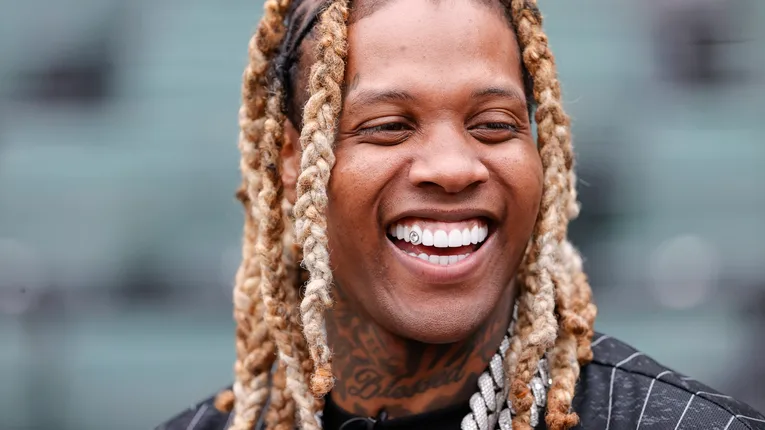
Lil Durk’s legal battle is about to take another big step, and DJ Akademiks is already sharing his expectations for what could go down when the rapper returns to court in November.
Durk is in custody, awaiting his next VICAR case in which authorities say he was running a criminal enterprise. His next trial was set for October 5, but recent developments have called into question when those proceedings will occur.
Durk’s murder for hire trial recently resulted in a not guilty verdict in November. Regardless of that outcome, he remains in custody because the separate racketeering related charges remain unresolved. Durk’s attorneys have asked for the new hearing and have been ordered to appear by U.S. Probation and Pretrial Services, which also must submit a fresh bail report.
Against that backdrop, legal commentator Bradford Cohen had previously suggested Durk could eventually get bond. That view ties in with Durk’s not-guilty verdict in the earlier case, and the argument that the outcome could make it harder to sustain the remaining allegations.
DJ Akademiks sees things a bit differently. In a recent livestream, Akademiks predicted that Durk would not get a bond at the Nov. hearing. He believes the charges will stick and cites the seriousness of the allegations in the VICAR case as his reasoning. He also doesn’t appear to expect the rapper to be released from jail anytime soon as the case moves forward.
Akademiks’ prediction concerns the bond hearing, not Durk’s chances at trial. Durk’s legal situation remains unresolved for now. His recent acquittal has altered the circumstances of his arrest, but the separate racketeering case still looms over the rapper as both sides prepare for the next phase.
Celebrity
DJ Akademiks Resurrects 2015 Drake vs. Meek Mill Beef With Alleged Nicki Minaj Backstory
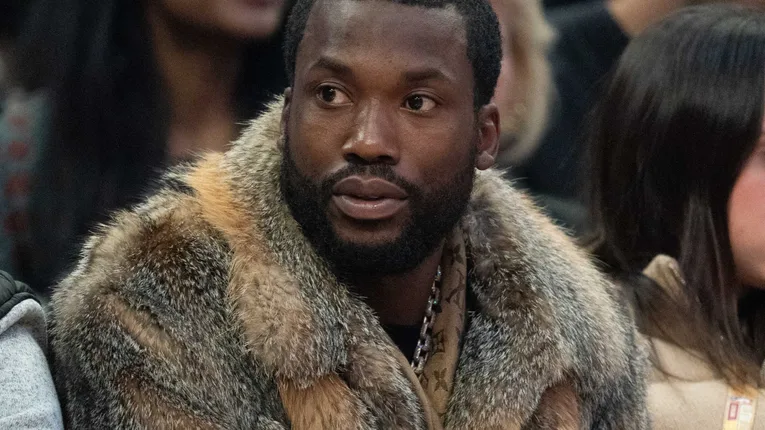
DJ Akademiks is digging up hip-hop history buried for 10 years as he offers his supposed explanation for how the Drake/Meek Mill feud came to a head in 2015. The back-and-forth between Akademiks and Meek Mill has resurfaced the conversation. Akademiks returned to the long-running Drake-Meek beef on his stream last night, saying a comment by Nicki Minaj had something to do with what happened between the two rappers.
According to Akademiks, Meek and Minaj were shopping at a designer fashion store when they got to the register. He says that when Meek told her he didn’t have the cash to pay for Minaj, she allegedly told him he would never be Drake. Akademiks also claims Minaj left the store on her own, and then Meek went on X, and what happened next started the infamous feud with Drake.
The account remains an allegation, not a confirmed explanation. The information provided has not been independently verified, and ultimately only those involved, including Minaj and Meek Mill, could confirm the story’s authenticity.
Read more : Chrisean Rock Wins Boxing Match, But Second Round Forfeit Leaves Her Frustrated
The beef between Drake and Meek Mill started in 2015 and has become a staple in hip-hop conversation. Meek struggled after the fallout, while the beef became a defining moment in Drake’s career. However, the two eventually made up and collaborated on “Going Bad,” signaling a return to a more cooperative relationship despite the rivalry’s tension.
Now that Akademiks and Meek are throwing shots again, the events of 2015 are back in the conversation. By reflecting on the feud, Akademiks has added another possible piece of context to a story that has been a hot topic in hip-hop for years.
Whether his version of events is what actually happened, however, remains unresolved. Currently, the designer-store story isn’t factual, but it is Akademiks’ version of the events surrounding the beef.

-
 Artist Spotlight6 days ago
iLLLACAT brings sharp bars and catchy production with latest release “Like Dat”
-

 Artist Spotlight6 days ago
Joshua Jamison unveils intimacy and a full rock expression on latest release “Windows”
-
 Artist Spotlight6 days ago
ALPHA CENTAURI blends hip-hop, funk and afrobeat ambition on latest release “The Future Right Now”
-

 Artist Spotlight6 days ago
Emilie Thorsby turns self-belief into a bold musical statement with latest release “Amazing as hell”
-

 Artist Spotlight5 days ago
Amanda Fagan unveils lost love and regret on latest release “Forever Yearn”
-

 Artist Spotlight6 days ago
UNDAUNTED unveils broken memories with latest release “Shattered Echoes”
-

 Artist Spotlight23 hours ago
“NO MORE” by Amanda Holley connects healing, awakening, and survival
-

 Artist Spotlight23 hours ago
“Subterranean Homesick Blues” finds a new direction through Ghost of Panama