
Album Review
Singer-songwriter Sacha Mullin drops his third solo album, “Casino Wilderness Period”

Chicago’s talented singer-songwriter Sacha Mullin has released his third solo album, “Casino Wilderness Period,” a captivating musical journey combining rock, jazz, and introspective songwriting. Todd Rittmann, a former band member of U.S. Maple, produces the album. It features an impressive lineup of backing vocalists, including industry legends Emily Bindiger, Judi Vinar, Annmarie Cullen, and Mem Nahadr.
The lead single, “Arranging Flowers,” is a powerful song exploring celebrity worship, luxury, and existentialism themes. The accompanying music video by German media artist Glass Void adds a visual layer to the song’s intelligent lyrics.
Sacha Mullin’s “Casino Wilderness Period” is an immersive experience that pushes the boundaries of musical expression. It’s available on all major streaming platforms and must-listen for music lovers seeking a refreshing and innovative sound.

Album Review
Cognitive Constellation Corps blurs humanity and technology on “Thank You for Your Feedback (I)” album

In a world of notifications and automated responses, algorithms, and feedback requests, Cognitive Constellation Corps finds something unexpectedly human inside the machinery. “Thank You for Your Feedback (I)” is an alt-pop exploration of connection, isolation, communication, and the increasingly complicated relationship between people and technology, transforming familiar procedural language into something else.
Created by Brooke Tamsin Clevenger, a Belfast-based artist, the project’s principal composer, lyricist, producer, and conceptual director, the album is deliberately constructed around what happens to human emotion when our lives are increasingly structured by systems that process information rather than necessarily understand feelings. The album opens with “Opening Loop (i),” which introduces that world through the idea of repetition, linking software loops to the habits we humans learn in modern life.
Followed by “Signal Received (i),” the track becomes more fragile, a mix of bubbling electronic movement and the promise of waiting for a response. It picks up the strange emotional weight that can be behind something as simple as a digital signal. “Thank You For Your Feedback (i)” examines the pressure to be constantly evaluated, and “Echo Chamber (i)” reflects on how digital interaction creates intimacy and amplifies alienation. “The Curve of Clarity (i)” is a road toward understanding where data and human realization begin to converge.
On the production side, the project explores electronic textures without allowing its technological concept to overwhelm its emotional core. “Threadbare, Threadshare (i)” turns the fatigue of constant communication into an interesting concept. “The Response Loop (You’re Still Talking)” injects a sense of urgency with a faster, more club-friendly beat that mixes early-80s electronic music with state-of-the-art sounds.
“Harmonic Distortion (i)” continues the album’s obsession with emotion that has been filtered, and “Always (i) [Sevahem]” is an appropriate closer, reflecting on organic feeling and ancient human knowledge through the prism of digital sound. “Thank you for Your Feedback” is a tech-driven concept that is always aware of the person behind the screen. Cognitive Constellation Corps is cerebral and electronic and conceptually ambitious while remaining emotionally accessible.
Album Review
With “The Rhythm of Mandolay” album, Eye Travel finds beauty in the space between memory, melodies, and moments
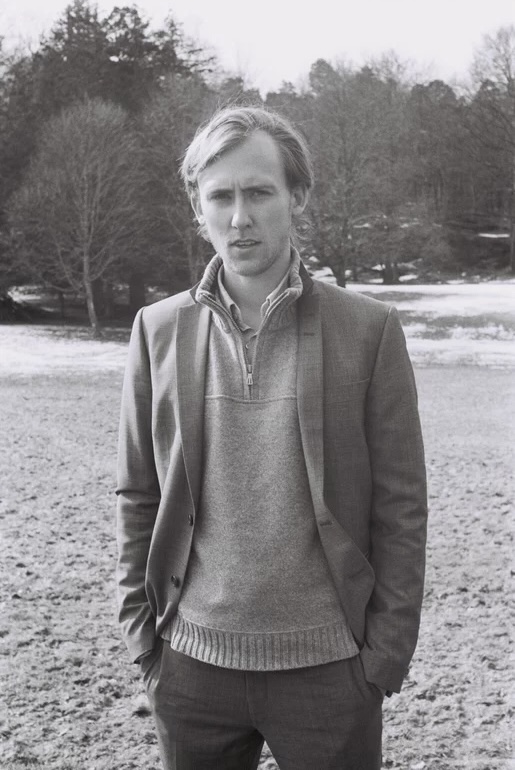
With “The Rhythm of Mandolay,” Gothenburg singer-songwriter Christoffer Andersson, known from his musical project Eye Travel, reveals a deeply personal world. It is an 11-track album forged in time, reflection, and creative discovery and a crossroads between past and present.
The project was recorded with Charles Storm at the Cloudchamber studio on the island of Hisingen, and it turns individual songs into a linked collection where raw emotion, acoustic beauty, and vintage influences coexist. The album kicks off with “Holly,” a dramatic opener built on an Omnichord foundation and expressive vocals that have a theatrical quality. Next up is “Birdsong,” a more delicate affair with breezy melodies that recall the charms of 90’s pop.
For “Verona,” Eye Travel strips everything back and creates an intimate acoustic moment that captures feelings of distance and quiet longing. “Going Under” takes a different direction, using heavy Moog bass and lush string and flute arrangements to create a boisterous, vintage-inspired sound with lots of movement. Meanwhile, “This Planet” takes a bright, catchy pop approach that brings a playful energy, and “Beech Street” is a warm, reflective acoustic folk-pop memory trip.
“Castle” slows the pace to a gentle European folk feel, establishing an intimate, personal atmosphere. “Scientia” is a nicely placed instrumental lullaby that helps the album flow, and “Surface” is a quick but poignant glimpse of a fleeting feeling. “Pauline” is one of the album’s most powerful moments, a grand, emotional performance that captures its drama.
The last song on the album, “Comforting Hell,” leaves a bittersweet taste, exploring the tricky places where sadness and comfort can coexist. “The Rhythm of Mandolay” is an album carefully constructed on the rhythm of contrast. Eye Travel delivers a timeless record that is so very human, drawing on vintage influences, acoustic storytelling, and emotional honesty.
Connect – FB

-

 Artist Spotlight2 days ago
C’batch turns an old guitar performance into a new story with “Our Little Pooh Pea (The Last Light) 4 – Cinematic”
-

 Artist Spotlight5 days ago
“NO MORE” by Amanda Holley connects healing, awakening, and survival
-
 Artist Spotlight5 days ago
“Subterranean Homesick Blues” finds a new direction through Ghost of Panama
-

 Artist Spotlight3 days ago
Sara Diana follows a wild spirit into the moonlight on latest release “Her Hair’s Like Fire”
-

 Artist Spotlight5 days ago
Lisa Jo draws a line under the past with latest release “Done Druggin’ Away the Pain”
-

 Artist Spotlight3 days ago
Tabi Harlowe captures the ache behind attraction with latest release “So Pretty (It Hurts)”
-

 Artist Spotlight3 days ago
Dusty Edinger crackle tension into rock electricity with latest release “We Outshine”
-

 Artist Spotlight5 days ago
Crooner Ed captures a sweet romantic moment on “I Love This View”