
Music
Busta Rhymes’ ‘E.L.E. 2’ Balances His Versatility With Old-School Rap Traditionalism
Getty Image A sequel over 20 years in the making, ‘E.L.E. 2’ touches on modern anxieties with a fiery Busta still at the height of his lyrical…
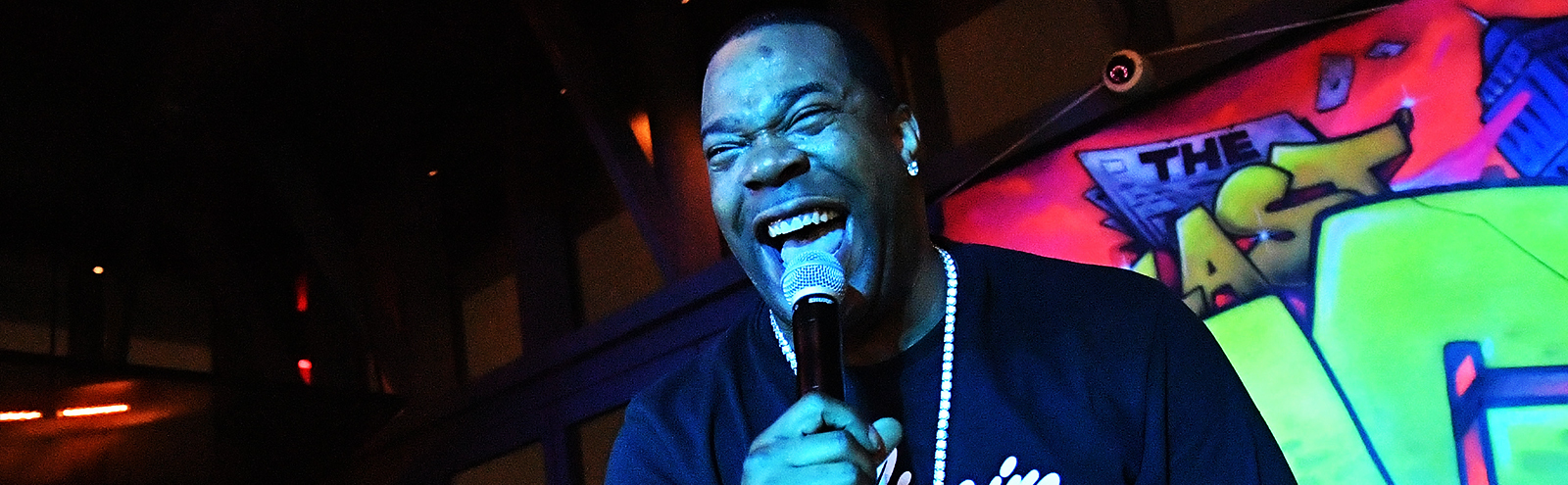
Busta Rhymes‘ new album, the ungainly titled Extinction Level Event 2: The Wrath Of God is a dynamic display of the 30-year veteran’s chameleonic versatility. However, it also shows that there is a tremendous gulf between blending in and adapting. Hip-hop and pop culture are in far different places than they were when he exploded onto the scene, roaring like a dungeon dragon.
Busta’s kept pace over the past three decades, morphing his flow and persona to craft hits and remain relevant. In each era of his career, he both stood out and fit comfortably astride the then-current wave. At the height of the Native Tongues’ supremacy, Busta and the Leaders Of The New School donned the uniform of New York’s baggy jeans rap scene. Then, when Busta himself went solo, he became an agent of chaos on The Coming…, a guise that served him well through the original Extinction Level Event, a sprawling concept album that portended doom and gloom in the coming years.
That eerie outlook was likely influenced by anxieties circulating around the turn of the millennium, as Hollywood churned out disaster film after disaster film and cable news warned of the looming Y2K computer shutdown sure to devastate systems globally. All across America, folks stocked up on bottled water and canned goods as they prepared for what seemed like it might be the end of the world.
Of course, the “end of the world” is a ragged concept, hashed together by film executives and sci-fi writers for maximum dramatic effect. In reality, the world trends toward decay, the systems and infrastructure we rely on to keep things moving simply degrading until they’re replaced by the next thing, which will immediately begin its own slow slide toward irrelevance. The real world looks much more like Chinua Achebe’s Things Fall Apart than Deep Impact or Armageddon.
Rappers often experience the same disorienting transformation of the world around them as Achebe’s Okonkwo. The world they know is slowly erased and unable to find their footing, they self destruct in ways both spectacular and mundane. Sometimes they fail to change and sometimes they blow up on the younger generation’s lack of the values they grew up respecting but it’s practically inevitable that all sacred cows eventually become hamburger.
That Busta has thus far staved off the fate that befell more than a few of his peers — where are Charlie Brown and Dinco D these days? — it’s hard for me to miss the red flags amid the sturm and drang of E.L.E. 2‘s ominous pronouncements and lyrical pyrotechnics. Think of how many of Busta’s peers never managed to adjust their ears to process any type of hip-hop instrumentals other than the break-beat-sampling boom-bap of their teenage era. Busta himself stays up to date here but while the references are modern enough — “The Purge,” soulful loops that match guest rappers’ best sonic palettes like the Rick Ross-featuring “Master Fard Muhammad,” and a willingness to experiment with trap on “Blowing The Speakers” — there are missteps like the dated-sounding synth claps on “Where I Belong.”
When it comes to the raps, there’s no question that Busta remains one of the most gifted MCs to survive from his generation. Breath control and rhyme schemes are like eating, sleeping, and blinking to the seasoned vet, they come so easily to him they may as well be automatic. But no matter how elaborate the pattern or devastating the punchline, it never feels like he’s telling us anything we don’t already know either about him or the state of the world. When he tries to delve deeper into the apocalyptic prophecy, he tends to come up dry. There’s no insight, just a reflection of all the generalized anxieties we all feel with a global pandemic and ecological disaster hanging over us. I would have loved more of the Busta from his recent collaboration with Stevie Wonder, who sounded hopeful and motivated for change.
Even worse, he tucks in hints of the sort of out-of-touch finger-wagging many of his peers have fallen prey to in the past year. In a world where pop culture has accepted Tyler The Creator, Lil Nas X, and Brockhampton, his “demasculinization” line on “E.L.E 2: The Wrath Of God” sends up a flare to the wrong kinds of personalities. When Kanye, Lil Wayne, Ice Cube, and more have made fools of themselves and highlighted how unengaged they are politically within a month of what could be the most important election in American history to date, I wanted someone, anyone that I grew up idolizing to give me anything other than more Q-style the conspiracy theorizing and hyper-religious alarmism of “Satanic.”
In a year which saw a bunch of rappers release follow-ups to fan-favorite albums illustrating growth and vulnerability, I would have been fine if Busta had skipped the doomsaying concept of the original and cut the tracklist down to include only the virtuosic flows of “Czar,” “Slow Flow,” and “Look Over Your Shoulder.” The supermarket tabloid political commentary overshadows Busta’s showmanship just enough that the extinction he stresses on the rest of the album may just be his own.
Extinction Level Event 2: The Wrath of God is out now via The Conglomerate Entertainment, Inc. / EMPIRE. Get it here.

Artist Spotlight
Andrew Batcheler sparks sudden romance on latest release “I’m in Love”

Andrew Batcheler is back with his new single “I’m in Love” and it’s a joyous celebration of surprise romance. The single has catchy guitars, engaging drums and a concept about the magic of falling in love with someone. The release captures the rush of a strong romantic connection. Life is the same as it always was, and then one meeting turns your whole outlook on life upside down. That quick change is the core of “I’m in Love,” which provides the song with a relatable core for anyone who knows how quickly love can turn real.
The song’s romantic focus also makes it clear that it’s the little moments that can make a big impact. Each one molds the emotional character of the release. A shared kiss, a special evening, a wish to go back to the moment when everything seemed perfect- This song is about the feeling of a relationship you will never forget.
The guitars are catchy and build the song’s appeal. Drums give a lively background. These instrumental gestures combine to make the recording accessible and engaging, appropriate to its romantic subject. Together they create a bright, welcoming mood, letting the main theme stand out.
Andrew Batcheler’s “I’m In Love” is a romantic release that explores connection, attraction and the lingering effects of shared experiences. It’s a catchy instrumental approach to a theme everyone can recognize. The song is an ode to how one unexpected moment can turn into a treasured memory.
Connect with Andrew Batcheler on Spotify || Instagram || Youtube
Artist Spotlight
Jeffery journey’s from childhood streets to new heights on latest release “ALBANIE”
“ALBANIE” is a high energy song that was inspired by the streets that Jeffery grew up on. Jeffery’s “ALBANIE” brings you back to where his story began. More than a tip of the cap to a familiar place, the release offers a glimpse into his own path, what kept him going and the want that was there long before others saw his potential.
Jeffery connects his current musical journey to the formative experiences that molded him, drawing on the influences of his early surroundings. It has the feel of an artist looking back on his journey, how much work it took to get where he is now, and how far he’s come.
That energy is a response to the personal significance of the title, making the song a statement of progress as well as a tribute to the location of that progress. That removes some of the authenticity of the release. Success can alter the public’s perception of an artist, but the work behind that progression often begins long before the public becomes aware of it. Jeffery connects his current dreams with his earlier self by reassuming the name he once used in his youth.
ALBANIE is a statement of growth without losing your roots. It’s a mix of personal history, determination and a lively musical style that gets people moving to the beat. Jeffery’s proud of the work he’s done with this release, but also knows the foundation it’s laid. It’s a song that bridges hometown memories and future ambition, a reminder that where an artist starts can still be a vital part of where they’re going.
Connect with Jeffery on Spotify || Instagram || Facebook || Youtube

-

 Artist Spotlight2 days ago
Kamil Koksa captures shimmering romance on latest release “HIGH ON THE HOLIDAYS”
-

 Artist Spotlight2 days ago
Austin Powell unveils a cheeky energy on latest release “Retribution”
-
 Artist Spotlight2 days ago
Wyn Davies pulls back the curtain on truth and human connection with “The Lifting of the Veil”
-

 Artist Spotlight2 days ago
Naomi Jane unveils a statement of independence on latest release “Passenger Princess”
-
 Artist Spotlight3 days ago
BIG OZ brings west coast swagger and modern hip-hop energy on latest release “OH MY”
-

 Artist Spotlight3 days ago
loveoleglove asks for a way back into a guarded heart with latest release “Open Mine”
-
 Artist Spotlight3 days ago
With “Cyberstalking,” One Empty Toybox turns a serious issue into a purpose-driven release
-

 Album Review3 days ago
With “MAHA,” Pridhvi Sunain Zoro confronts capitalism, love, and the fight for equality (album)