
Album Review
Scaling New Heights: A Review of Michael Zuzek’s Everest LP

In an era where the musical landscape is as diverse as the peaks of the Himalayas, Michael Zuzek’s latest LP, Everest, stands as a towering achievement that boldly scales the lofty aspirations of classic rock. A self-engineered, produced, and mastered effort alongside Aidan Ellison, *Everest* is an ambitious, introspective journey that reflects both the weight of emotional highs and the depths of personal valleys.
The album opens with “The Man Who’s Never Found,” a track that immediately sets the tone for the LP’s thematic exploration of solitude and the quest for identity. Zuzek’s vocals, tinged with a weary yet resilient edge, carry the narrative of a man wandering through life’s desolate roads, seeking something elusive. The collaboration between Maarten Colenbrander and Scott Fordham on bass, coupled with Marco Ciardullo’s evocative guitar work, creates a rich, layered soundscape that complements Zuzek’s poignant piano and synth lines. The song’s narrative evokes a sense of yearning and disillusionment, reminiscent of the existential musings found in Springsteen’s *Nebraska*.
“All Comes Back” serves as a cathartic response to the opener’s despair, offering a glimpse of redemption amidst the chaos. Zuzek’s use of the piano and organ here is particularly notable, blending seamlessly with Scott Fordham’s bass and Ciardullo’s guitar to create a soulful, almost gospel-like atmosphere. The song’s lyrics suggest a cyclic nature of life’s trials and tribulations, with the recurring refrain “it all comes back to you” acting as both a warning and a comfort. There’s a subtle nod to Robbie Robertson’s influence, not just in the composition but in the thematic depth that reflects the cyclical struggle of life, akin to The Band’s explorations of American mythology.

With “5000 Days,” Zuzek dives into the themes of loss and the relentless passage of time. The track’s driving rhythm and haunting melodies evoke a sense of urgency, as Zuzek’s lyrics recount the pain of separation and the longing for reconciliation. Ciardullo’s guitar work once again shines, weaving in and out of Zuzek’s emotive piano lines, while Colenbrander’s bass provides a steady foundation that grounds the song’s emotional weight. The song’s energy and tempo—a brisk 180 BPM—capture the frantic attempt to reclaim lost time, a sentiment that resonates deeply with the listener.
“No Other” is perhaps the most heart-wrenching track on Everest, a love song that veers away from sentimentality and instead delves into the darker corners of human relationships. Zuzek’s lyrics explore the push-and-pull of a relationship fraught with misunderstanding and emotional distance. Brandon Marks’ guitar work, alongside Leah Vanderbyl’s drumming, adds a sharp, almost discordant edge to the track, mirroring the tension between the song’s protagonists. The contrast between the verses and chorus, with their differing tempos, reflects the instability of the relationship Zuzek sings about—a dissonance that ultimately feels cathartic.
“Sweet and Kind” provides a momentary respite in the album’s emotional journey, offering a softer, more reflective tone. The interplay between Zuzek’s piano, E-piano, and organ, along with Colenbrander’s bass and Ciardullo’s guitar, creates a lush, almost ethereal soundscape. The lyrics, however, suggest an underlying tension, as Zuzek sings of a love that is fleeting, always just out of reach. The song builds slowly, never quite reaching a climax, much like the unfulfilled promises it describes.
The existential dread reaches its peak with “Has My God Forsaken Me?”, a track that plunges the listener into the depths of despair and doubt. The song’s heavy organ and synth, combined with a relentless bass line and Ciardullo’s ominous guitar riffs, create an atmosphere thick with foreboding. Zuzek’s vocal delivery is raw and unfiltered, as he grapples with themes of abandonment and loss of faith. The track’s intensity is only heightened by its placement within the album, serving as a dark mirror to the fleeting moments of hope found earlier.
Closing the album is “Graystone,” a track that encapsulates the themes of memory and nostalgia that permeate *Everest*. Zuzek’s piano-driven melody is hauntingly beautiful, with Fordham’s bass and Colenbrander’s acoustic guitar adding layers of warmth and depth. The song reflects on the passage of time and the remnants of the past, much like a weathered stone that still holds the echoes of history. Zuzek’s lyrics are introspective, touching on the bittersweet nature of memory and the inevitability of change. It’s a fitting end to an album that has journeyed through both the peaks and valleys of the human experience.
Everest is a masterclass in modern rock songwriting, blending introspective lyrics with rich, textured instrumentation. Michael Zuzek’s ability to craft songs that resonate on both a personal and universal level is evident throughout the LP. The collaborative efforts of the musicians, particularly Ciardullo’s versatile guitar work and Colenbrander’s steady bass, elevate the album to a sonic landscape that feels both vast and intimate.
In Everest, Zuzek has created not just a collection of songs, but a cohesive narrative that explores the complexities of life’s emotional terrain. It’s an album that invites the listener to reflect, to feel, and ultimately, to understand the beauty in the climb, no matter how steep the path.
-Albert Ignatius












Album Review
Cognitive Constellation Corps blurs humanity and technology on “Thank You for Your Feedback (I)” album

In a world of notifications and automated responses, algorithms, and feedback requests, Cognitive Constellation Corps finds something unexpectedly human inside the machinery. “Thank You for Your Feedback (I)” is an alt-pop exploration of connection, isolation, communication, and the increasingly complicated relationship between people and technology, transforming familiar procedural language into something else.
Created by Brooke Tamsin Clevenger, a Belfast-based artist, the project’s principal composer, lyricist, producer, and conceptual director, the album is deliberately constructed around what happens to human emotion when our lives are increasingly structured by systems that process information rather than necessarily understand feelings. The album opens with “Opening Loop (i),” which introduces that world through the idea of repetition, linking software loops to the habits we humans learn in modern life.
Followed by “Signal Received (i),” the track becomes more fragile, a mix of bubbling electronic movement and the promise of waiting for a response. It picks up the strange emotional weight that can be behind something as simple as a digital signal. “Thank You For Your Feedback (i)” examines the pressure to be constantly evaluated, and “Echo Chamber (i)” reflects on how digital interaction creates intimacy and amplifies alienation. “The Curve of Clarity (i)” is a road toward understanding where data and human realization begin to converge.
On the production side, the project explores electronic textures without allowing its technological concept to overwhelm its emotional core. “Threadbare, Threadshare (i)” turns the fatigue of constant communication into an interesting concept. “The Response Loop (You’re Still Talking)” injects a sense of urgency with a faster, more club-friendly beat that mixes early-80s electronic music with state-of-the-art sounds.
“Harmonic Distortion (i)” continues the album’s obsession with emotion that has been filtered, and “Always (i) [Sevahem]” is an appropriate closer, reflecting on organic feeling and ancient human knowledge through the prism of digital sound. “Thank you for Your Feedback” is a tech-driven concept that is always aware of the person behind the screen. Cognitive Constellation Corps is cerebral and electronic and conceptually ambitious while remaining emotionally accessible.
Album Review
With “The Rhythm of Mandolay” album, Eye Travel finds beauty in the space between memory, melodies, and moments
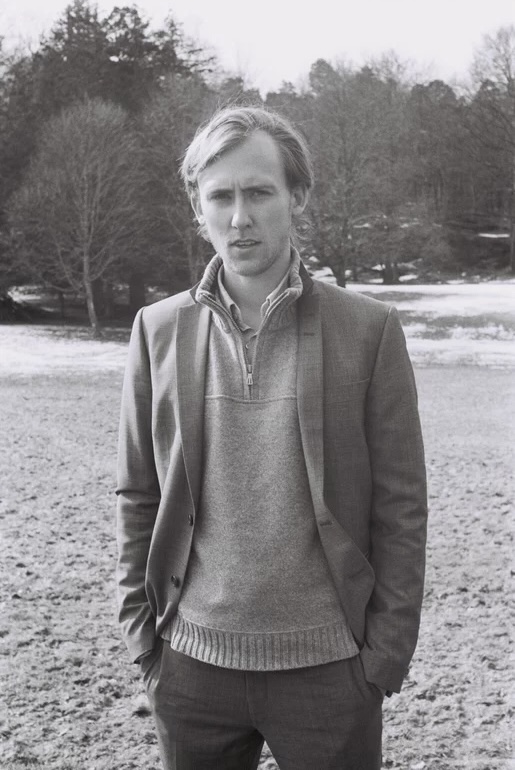
With “The Rhythm of Mandolay,” Gothenburg singer-songwriter Christoffer Andersson, known from his musical project Eye Travel, reveals a deeply personal world. It is an 11-track album forged in time, reflection, and creative discovery and a crossroads between past and present.
The project was recorded with Charles Storm at the Cloudchamber studio on the island of Hisingen, and it turns individual songs into a linked collection where raw emotion, acoustic beauty, and vintage influences coexist. The album kicks off with “Holly,” a dramatic opener built on an Omnichord foundation and expressive vocals that have a theatrical quality. Next up is “Birdsong,” a more delicate affair with breezy melodies that recall the charms of 90’s pop.
For “Verona,” Eye Travel strips everything back and creates an intimate acoustic moment that captures feelings of distance and quiet longing. “Going Under” takes a different direction, using heavy Moog bass and lush string and flute arrangements to create a boisterous, vintage-inspired sound with lots of movement. Meanwhile, “This Planet” takes a bright, catchy pop approach that brings a playful energy, and “Beech Street” is a warm, reflective acoustic folk-pop memory trip.
“Castle” slows the pace to a gentle European folk feel, establishing an intimate, personal atmosphere. “Scientia” is a nicely placed instrumental lullaby that helps the album flow, and “Surface” is a quick but poignant glimpse of a fleeting feeling. “Pauline” is one of the album’s most powerful moments, a grand, emotional performance that captures its drama.
The last song on the album, “Comforting Hell,” leaves a bittersweet taste, exploring the tricky places where sadness and comfort can coexist. “The Rhythm of Mandolay” is an album carefully constructed on the rhythm of contrast. Eye Travel delivers a timeless record that is so very human, drawing on vintage influences, acoustic storytelling, and emotional honesty.
Connect – FB

-

 Entertainment7 days ago
The Jonas Brothers Just Played Halftime At The NFL’s First-Ever Game In Australia
-

 Entertainment7 days ago
Harry Styles Is Extending His Tour Into 2027 — And Finally Playing U.S. Stadiums Solo
-

 Entertainment7 days ago
Taylor Swift Is Finally Heading Back To The CMAs After A Decade Away
-

 Artist Spotlight4 days ago
Eylsia creates an electronic energy on latest release “Music in My Mind”
-

 Artist Spotlight4 days ago
Burd & Keyz celebrates a new chapter through hip-hop on latest release “Miracles”
-

 Artist Spotlight4 days ago
ELISA MINELLI offers courage in your own hands with latest release “Grab Your Guitar”
-

 Artist Spotlight4 days ago
Karate Boogaloo proves simple riffs still hit hard on latest release “Down Home”
-
 Artist Spotlight4 days ago
ALEXATOR turns electric guitars and synths into pure energy with latest release “Through the Fire”