
Album Review
Eddie Cohn stirs a poetic reckoning of emotional emancipation to bid farewell with “Wheels Stop”

Eddie Cohn, a distinguished musician based in Los Angeles, has significantly evolved in his artistic trajectory and stylistic versatility. His latest single, “Wheels Stop,” emphasizes his penchant for profound introspection. This track, a prominent feature on his forthcoming six-track EP, examines themes of confusion, unraveling the intrigues of toxic relationships and the fears of being lost in thoughts while seeking to recover one’s mental sanity. It transcends a mere cathartic expression, embodying a dynamic and unapologetically assertive progression toward creative autonomy.
From the outset, “Wheels Stop” is marked by a palpable intensity, driven by a brooding undercurrent that underlies Cohn’s formidable vocal execution. His voice strikes a nuanced interplay of weariness and optimism, expertly encapsulating the sensation of standing at the brink of a bittersweet transformative experience. The lyrics demonstrate a precise mastery of poetic conciseness, with each line meticulously crafted to augment a rhythmic underpinning that aligns with the gradual revelation of more profound insights.
Musically, “Wheels Stop” navigates a richly contrasting soundscape, merging grunge, 80s rock, and contemporary indie influences. Jake Reed’s precise drumming provides a robust anchor, while Dan Lutz’s resonant bass maintains a hypnotic pulse throughout the piece. These core components effectively reflect the emotional turbulence central to pursuing liberation. Brett Farkas’s guitar work, augmented by Phil Peterson’s intricate layering of instrumentation, introduces an atmospheric depth, culminating in a multidimensional sonic experience. The production methodology, juxtaposing traditional studio techniques with innovative remote collaborations, underscores the creative possibilities inherent in contemporary music production.
Kevin Penner’s proficient mixing and mastering enhance the track’s polished finish, preserving its emotional integrity while avoiding any descent into overproduction. “Wheels Stop” crystallizes a moment of clarity interwoven with melodic richness, marking a significant milestone in Cohn’s artistic development. This track provides an enriching auditory experience for discerning listeners who value music imbued with compelling complexity.
For more information about Eddie Cohn, please visit [website].
CLICK HERE TO STREAM Eddie Cohn’s “Wheels Stop“ on Spotify.
CONNECT WITH Eddie Cohn | Instagram | Twitter | Facebook |













Album Review
Cognitive Constellation Corps blurs humanity and technology on “Thank You for Your Feedback (I)” album

In a world of notifications and automated responses, algorithms, and feedback requests, Cognitive Constellation Corps finds something unexpectedly human inside the machinery. “Thank You for Your Feedback (I)” is an alt-pop exploration of connection, isolation, communication, and the increasingly complicated relationship between people and technology, transforming familiar procedural language into something else.
Created by Brooke Tamsin Clevenger, a Belfast-based artist, the project’s principal composer, lyricist, producer, and conceptual director, the album is deliberately constructed around what happens to human emotion when our lives are increasingly structured by systems that process information rather than necessarily understand feelings. The album opens with “Opening Loop (i),” which introduces that world through the idea of repetition, linking software loops to the habits we humans learn in modern life.
Followed by “Signal Received (i),” the track becomes more fragile, a mix of bubbling electronic movement and the promise of waiting for a response. It picks up the strange emotional weight that can be behind something as simple as a digital signal. “Thank You For Your Feedback (i)” examines the pressure to be constantly evaluated, and “Echo Chamber (i)” reflects on how digital interaction creates intimacy and amplifies alienation. “The Curve of Clarity (i)” is a road toward understanding where data and human realization begin to converge.
On the production side, the project explores electronic textures without allowing its technological concept to overwhelm its emotional core. “Threadbare, Threadshare (i)” turns the fatigue of constant communication into an interesting concept. “The Response Loop (You’re Still Talking)” injects a sense of urgency with a faster, more club-friendly beat that mixes early-80s electronic music with state-of-the-art sounds.
“Harmonic Distortion (i)” continues the album’s obsession with emotion that has been filtered, and “Always (i) [Sevahem]” is an appropriate closer, reflecting on organic feeling and ancient human knowledge through the prism of digital sound. “Thank you for Your Feedback” is a tech-driven concept that is always aware of the person behind the screen. Cognitive Constellation Corps is cerebral and electronic and conceptually ambitious while remaining emotionally accessible.
Album Review
With “The Rhythm of Mandolay” album, Eye Travel finds beauty in the space between memory, melodies, and moments
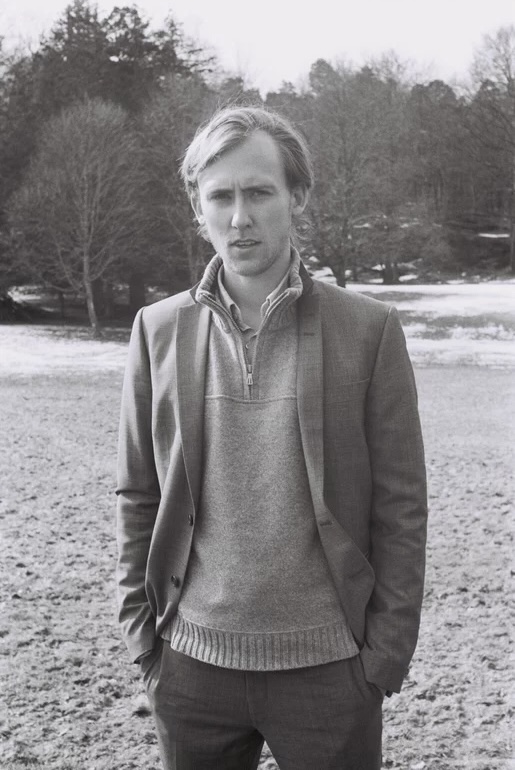
With “The Rhythm of Mandolay,” Gothenburg singer-songwriter Christoffer Andersson, known from his musical project Eye Travel, reveals a deeply personal world. It is an 11-track album forged in time, reflection, and creative discovery and a crossroads between past and present.
The project was recorded with Charles Storm at the Cloudchamber studio on the island of Hisingen, and it turns individual songs into a linked collection where raw emotion, acoustic beauty, and vintage influences coexist. The album kicks off with “Holly,” a dramatic opener built on an Omnichord foundation and expressive vocals that have a theatrical quality. Next up is “Birdsong,” a more delicate affair with breezy melodies that recall the charms of 90’s pop.
For “Verona,” Eye Travel strips everything back and creates an intimate acoustic moment that captures feelings of distance and quiet longing. “Going Under” takes a different direction, using heavy Moog bass and lush string and flute arrangements to create a boisterous, vintage-inspired sound with lots of movement. Meanwhile, “This Planet” takes a bright, catchy pop approach that brings a playful energy, and “Beech Street” is a warm, reflective acoustic folk-pop memory trip.
“Castle” slows the pace to a gentle European folk feel, establishing an intimate, personal atmosphere. “Scientia” is a nicely placed instrumental lullaby that helps the album flow, and “Surface” is a quick but poignant glimpse of a fleeting feeling. “Pauline” is one of the album’s most powerful moments, a grand, emotional performance that captures its drama.
The last song on the album, “Comforting Hell,” leaves a bittersweet taste, exploring the tricky places where sadness and comfort can coexist. “The Rhythm of Mandolay” is an album carefully constructed on the rhythm of contrast. Eye Travel delivers a timeless record that is so very human, drawing on vintage influences, acoustic storytelling, and emotional honesty.
Connect – FB

-

 Artist Spotlight6 days ago
iLLLACAT brings sharp bars and catchy production with latest release “Like Dat”
-

 Artist Spotlight6 days ago
Joshua Jamison unveils intimacy and a full rock expression on latest release “Windows”
-
 Artist Spotlight6 days ago
ALPHA CENTAURI blends hip-hop, funk and afrobeat ambition on latest release “The Future Right Now”
-

 Artist Spotlight6 days ago
Emilie Thorsby turns self-belief into a bold musical statement with latest release “Amazing as hell”
-

 Artist Spotlight5 days ago
Amanda Fagan unveils lost love and regret on latest release “Forever Yearn”
-

 Artist Spotlight6 days ago
UNDAUNTED unveils broken memories with latest release “Shattered Echoes”
-

 Artist Spotlight6 days ago
NITESHØRE embraces the long road to progress with “Marathon Mind”
-

 Artist Spotlight14 hours ago
“NO MORE” by Amanda Holley connects healing, awakening, and survival