
Album Review
Jangus Kangus shatters melodic boundaries with her debut album “Fortune Cookie”

Jangus Kangus, the intriguing musical force helmed by Jasmine Sankaran, has just cracked open her most audacious project to date, “Fortune Cookie,” an album that intricately weaves genre fluidity and emotional resonances. This collection of eight tracks serves as both a sonic manifesto and a significant milestone in contemporary indie-pop, characterized by unvarnished lyricism and engaging, jangly hooks.
The album commences with “You Only Love Me When,” a seemingly serene acoustic-pop track that establishes the thematic groundwork for a narrative exploration of desires, internal conflicts, and acts of defiance. It poignantly laments love that manifests only through revealed strength, portraying love as a timeless entity, even when entangled with the vices of broken individuals intoxicated by addictive substances. After this introduction, Kangus transitions into the introspective “Double Lives,” a shimmering soul-infused piece that methodically dissects the paradoxes inherent in love and the subdued anguish that frequently accompanies the double lives.
Progressing to “No Future In This,” the album’s melancholic yet assertive dive into romantic realism presents bold lyrical insights. This sentiment escalates into the heartbreak elegy “Our Love Is Dead,” here, rhythmic piano chords evoke a mournful grace that encapsulates the heaviness of lost love, distrust, and betrayal. The track underscores the necessity of relinquishing specific attachments to pivot away from unsafe circumstances, echoing the fortune teller’s chilling proclamation: our love is, indeed, dead. Then comes the wild card “Janakita Kirakita,” an intoxicating burst of sonic dynamism and gleeful experimental composition that injects curiosity and electric charm into the auditory tapestry, boldly challenging convention with every note.
Listeners will find “Goldilocks” particularly captivating; this genre-defying number draws from stylistic influences reminiscent of St. Vincent and The Smiths, skillfully merging nostalgia with contemporary innovation. It conveys an urgent yearning to reclaim lost love during periods of solitude. The penultimate track, “Honeymooners in Venice,” narrates a cinematic experience rich in post-modern nuances. Finally, the concluding piece, “High Rise,” offers a deep plunge into Sankaran’s introspections, leaving a reverberating and haunting impact.
Meticulously crafted with the dexterity of a seasoned lyricist and the fervor of a punk priestess, “Fortune Cookie” commands attention as a contemporary coming-of-age narrative rich with lo-fi grit and artistic ambition, all presented through a unique lens.
Featuring an outstanding lineup that highlights the intricate interplay of Steph Anderson on keys and backing vocals, Antonio White on lead guitar, Dan Perdomo on drums, and Ryan Kellis on bass, Jangus Kangus delivers a performance that harmonizes technical proficiency with emotional transcendence. The music constitutes a distinctive addition to diverse playlists, serving as an ideal backdrop for a heartbreak soundtrack or late-night contemplation, thereby ensuring its relevance and recurrence among discerning audiences.
CLICK HERE TO STREAM Jangus Kangus’s Album “Fortune Cookie“ on Spotify.
CONNECT WITH Jangus Kangus | Instagram | Facebook |

Album Review
Cognitive Constellation Corps blurs humanity and technology on “Thank You for Your Feedback (I)” album

In a world of notifications and automated responses, algorithms, and feedback requests, Cognitive Constellation Corps finds something unexpectedly human inside the machinery. “Thank You for Your Feedback (I)” is an alt-pop exploration of connection, isolation, communication, and the increasingly complicated relationship between people and technology, transforming familiar procedural language into something else.
Created by Brooke Tamsin Clevenger, a Belfast-based artist, the project’s principal composer, lyricist, producer, and conceptual director, the album is deliberately constructed around what happens to human emotion when our lives are increasingly structured by systems that process information rather than necessarily understand feelings. The album opens with “Opening Loop (i),” which introduces that world through the idea of repetition, linking software loops to the habits we humans learn in modern life.
Followed by “Signal Received (i),” the track becomes more fragile, a mix of bubbling electronic movement and the promise of waiting for a response. It picks up the strange emotional weight that can be behind something as simple as a digital signal. “Thank You For Your Feedback (i)” examines the pressure to be constantly evaluated, and “Echo Chamber (i)” reflects on how digital interaction creates intimacy and amplifies alienation. “The Curve of Clarity (i)” is a road toward understanding where data and human realization begin to converge.
On the production side, the project explores electronic textures without allowing its technological concept to overwhelm its emotional core. “Threadbare, Threadshare (i)” turns the fatigue of constant communication into an interesting concept. “The Response Loop (You’re Still Talking)” injects a sense of urgency with a faster, more club-friendly beat that mixes early-80s electronic music with state-of-the-art sounds.
“Harmonic Distortion (i)” continues the album’s obsession with emotion that has been filtered, and “Always (i) [Sevahem]” is an appropriate closer, reflecting on organic feeling and ancient human knowledge through the prism of digital sound. “Thank you for Your Feedback” is a tech-driven concept that is always aware of the person behind the screen. Cognitive Constellation Corps is cerebral and electronic and conceptually ambitious while remaining emotionally accessible.
Album Review
With “The Rhythm of Mandolay” album, Eye Travel finds beauty in the space between memory, melodies, and moments

With “The Rhythm of Mandolay,” Gothenburg singer-songwriter Christoffer Andersson, known from his musical project Eye Travel, reveals a deeply personal world. It is an 11-track album forged in time, reflection, and creative discovery and a crossroads between past and present.
The project was recorded with Charles Storm at the Cloudchamber studio on the island of Hisingen, and it turns individual songs into a linked collection where raw emotion, acoustic beauty, and vintage influences coexist. The album kicks off with “Holly,” a dramatic opener built on an Omnichord foundation and expressive vocals that have a theatrical quality. Next up is “Birdsong,” a more delicate affair with breezy melodies that recall the charms of 90’s pop.
For “Verona,” Eye Travel strips everything back and creates an intimate acoustic moment that captures feelings of distance and quiet longing. “Going Under” takes a different direction, using heavy Moog bass and lush string and flute arrangements to create a boisterous, vintage-inspired sound with lots of movement. Meanwhile, “This Planet” takes a bright, catchy pop approach that brings a playful energy, and “Beech Street” is a warm, reflective acoustic folk-pop memory trip.
“Castle” slows the pace to a gentle European folk feel, establishing an intimate, personal atmosphere. “Scientia” is a nicely placed instrumental lullaby that helps the album flow, and “Surface” is a quick but poignant glimpse of a fleeting feeling. “Pauline” is one of the album’s most powerful moments, a grand, emotional performance that captures its drama.
The last song on the album, “Comforting Hell,” leaves a bittersweet taste, exploring the tricky places where sadness and comfort can coexist. “The Rhythm of Mandolay” is an album carefully constructed on the rhythm of contrast. Eye Travel delivers a timeless record that is so very human, drawing on vintage influences, acoustic storytelling, and emotional honesty.
Connect – FB

-

 Artist Spotlight6 days ago
C’batch turns an old guitar performance into a new story with “Our Little Pooh Pea (The Last Light) 4 – Cinematic”
-

 Artist Spotlight5 days ago
Girlhood finds summer warmth and quiet freedom on “Lemon Aid”
-

 Artist Spotlight5 days ago
“Hell has frozen over” finds Sarina choosing peace over being understood
-

 Celebrity6 days ago
DJ Vlad Challenges Boosie Badazz Over Federal Gun Case
-
 Artist Spotlight6 days ago
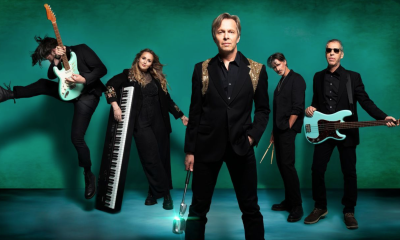
Johnny Hates Jazz and Jaki Graham put musical connection at the heart of “Soul Believer”
-

 Celebrity6 days ago
Aubrey O’Day Reacts After Former Diddy Staffers Reportedly Join Usher’s Team
-

 Artist Spotlight3 days ago
NAY PORTTELA bridges folk traditions and new expression on latest release “Don’t Wake Me”
-

 Artist Spotlight2 days ago
Emme Rain makes ambition unmistakable on latest release “Up Next”