
Album Review
Album Review: Pete Miller’s “Live on Record”
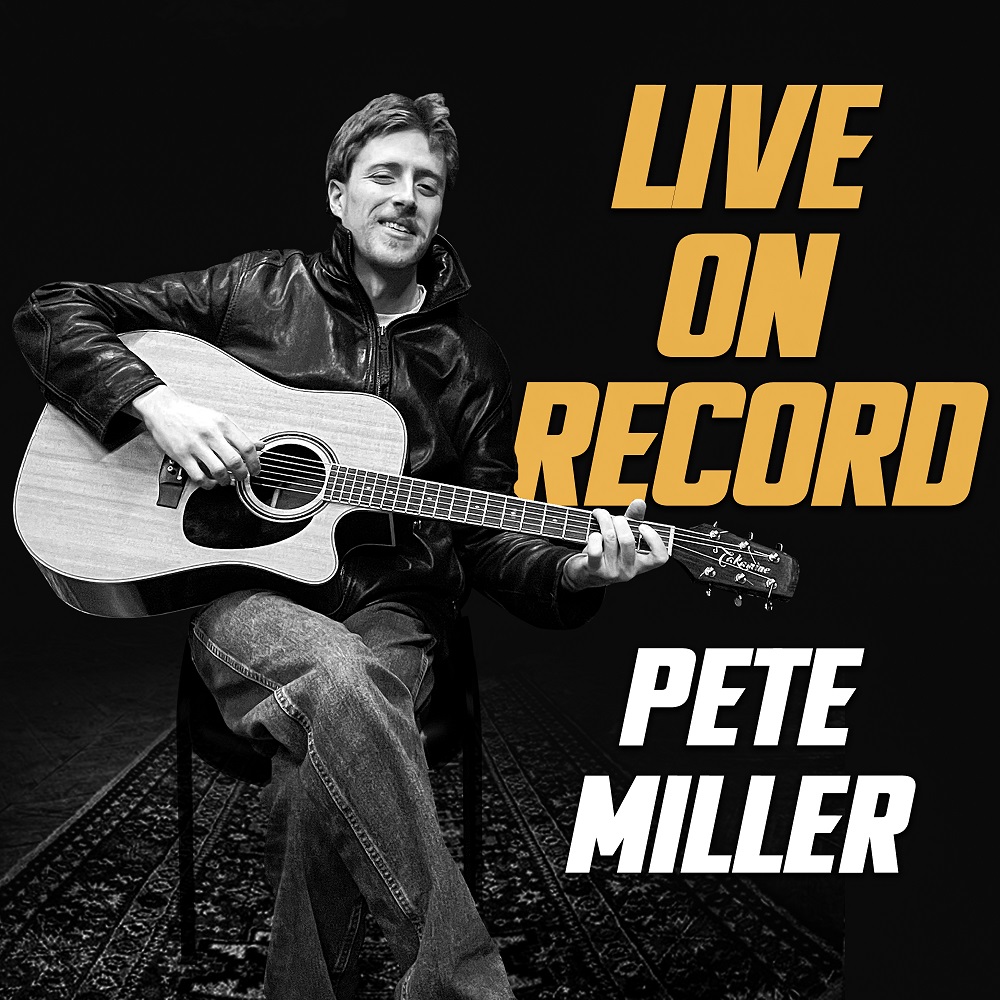
When it comes to genuine and unembellished music, Pete Miller’s debut album “Live on Record” is a revitalizing breeze in the current music landscape. Released on MTS Records, the LP presents an artist who, despite the modernity around him, channels a vintage, heartfelt essence that’s increasingly rare. Combining elements of folk, country, and rock, Miller’s work is a throwback to an era where music was raw and storytelling was genuine.
A Connecticut native who now calls Pennsylvania home, Pete Miller’s journey to his debut album wasn’t one paved with glitter and glamor. Escaping the allure of New York City, Miller worked various blue-collar jobs, including landscaping, warehouse labor, and construction while chasing his musical dreams. His life’s experiences, genuinely reflected in his songs, make “Live on Record” an autobiographical piece that resonates with the “everyman.”
From the get-go, Miller’s voice draws comparisons to the legendary Johnny Cash, a resemblance he carries with pride. His rich baritone and poetic lyricism are reminiscent of the Man in Black’s storytelling prowess. Influences of Townes Van Zandt’s melancholic narratives also weave through the album, grounding Miller firmly in the tradition of great American singer-songwriters.
The album’s opener, “A Light Out There – Intro Version,” sets the tone with a soulful introduction that hooks listeners. The lyrics, “You may go away, but the story will survive. You want to return, but wonder if you’ll arrive…” instantly pull you into Miller’s world – reflective, tinged with melancholy, yet hopeful. The full version of “A Light Out There” has garnered significant attention, amassing over 119K streams on Spotify and breaking into the UK iTunes Top 20 Singer-Songwriters Chart. The full album is quickly approaching 1 million Spotify streams!
Each song on the album is meticulously crafted to tell a story, from the contemplative “The Star Showman, Pt. I” to the earnest “Oh, Lord,” each track offers a glimpse into Miller’s life and experiences. In “The Dazzling Kimberly,” Miller’s narrative style shines through, painting vivid images of characters and emotions with minimalistic yet powerful instrumentation.
The simplicity of the album is its greatest strength. Miller’s acoustic guitar work is untainted by overproduction, allowing the natural sound of the instrument to take center stage. His playing is rhythmic and engaging, supporting his vocals without overshadowing the poignant lyrics. Tracks like “I Wrote Hannah a Letter” and “Hard to Find” showcase this beautifully, with Miller’s jangling guitar providing the perfect backdrop for his homespun poetry.
“Midnight Blue” and “The Raven & the Dove” delve deeper into Miller’s introspective side, offering meditative and almost haunting melodies that linger long after the song ends. They’re a testament to Miller’s ability to evoke strong emotions through his music, making listeners feel the weight of his words and the authenticity of his experiences.
The album’s closer, the complete version of “A Light Out There,” is a fitting end to the journey. It encapsulates the overarching themes of the album – longing, resilience, and a quest for meaning. The lyrics, “When you suffer, you’re out of this land. When you came back through that door, the waves didn’t remember your feet on the shore,” resonate with anyone who’s felt lost and found solace in the simplicity of life.
“Live on Record” is an album that doesn’t aspire to be flashy or trendy. Instead, it focuses on being real and relatable. Pete Miller’s music is a reflection of his life – unpolished yet profound, simple yet deeply meaningful. His storytelling is the heart of the album, and it’s this authenticity that makes his debut a standout.
As Miller works on his follow-up album in the woods of Pennsylvania, one can only anticipate the continuation of his musical journey. If “Live on Record” is any indication, Pete Miller is poised to carve out a niche for himself in the music industry, staying true to his roots and delivering music that is as raw and real as it gets.
For more information on Pete Miller and to connect with his music, check him out on Facebook.













Album Review
Cognitive Constellation Corps blurs humanity and technology on “Thank You for Your Feedback (I)” album

In a world of notifications and automated responses, algorithms, and feedback requests, Cognitive Constellation Corps finds something unexpectedly human inside the machinery. “Thank You for Your Feedback (I)” is an alt-pop exploration of connection, isolation, communication, and the increasingly complicated relationship between people and technology, transforming familiar procedural language into something else.
Created by Brooke Tamsin Clevenger, a Belfast-based artist, the project’s principal composer, lyricist, producer, and conceptual director, the album is deliberately constructed around what happens to human emotion when our lives are increasingly structured by systems that process information rather than necessarily understand feelings. The album opens with “Opening Loop (i),” which introduces that world through the idea of repetition, linking software loops to the habits we humans learn in modern life.
Followed by “Signal Received (i),” the track becomes more fragile, a mix of bubbling electronic movement and the promise of waiting for a response. It picks up the strange emotional weight that can be behind something as simple as a digital signal. “Thank You For Your Feedback (i)” examines the pressure to be constantly evaluated, and “Echo Chamber (i)” reflects on how digital interaction creates intimacy and amplifies alienation. “The Curve of Clarity (i)” is a road toward understanding where data and human realization begin to converge.
On the production side, the project explores electronic textures without allowing its technological concept to overwhelm its emotional core. “Threadbare, Threadshare (i)” turns the fatigue of constant communication into an interesting concept. “The Response Loop (You’re Still Talking)” injects a sense of urgency with a faster, more club-friendly beat that mixes early-80s electronic music with state-of-the-art sounds.
“Harmonic Distortion (i)” continues the album’s obsession with emotion that has been filtered, and “Always (i) [Sevahem]” is an appropriate closer, reflecting on organic feeling and ancient human knowledge through the prism of digital sound. “Thank you for Your Feedback” is a tech-driven concept that is always aware of the person behind the screen. Cognitive Constellation Corps is cerebral and electronic and conceptually ambitious while remaining emotionally accessible.
Album Review
With “The Rhythm of Mandolay” album, Eye Travel finds beauty in the space between memory, melodies, and moments

With “The Rhythm of Mandolay,” Gothenburg singer-songwriter Christoffer Andersson, known from his musical project Eye Travel, reveals a deeply personal world. It is an 11-track album forged in time, reflection, and creative discovery and a crossroads between past and present.
The project was recorded with Charles Storm at the Cloudchamber studio on the island of Hisingen, and it turns individual songs into a linked collection where raw emotion, acoustic beauty, and vintage influences coexist. The album kicks off with “Holly,” a dramatic opener built on an Omnichord foundation and expressive vocals that have a theatrical quality. Next up is “Birdsong,” a more delicate affair with breezy melodies that recall the charms of 90’s pop.
For “Verona,” Eye Travel strips everything back and creates an intimate acoustic moment that captures feelings of distance and quiet longing. “Going Under” takes a different direction, using heavy Moog bass and lush string and flute arrangements to create a boisterous, vintage-inspired sound with lots of movement. Meanwhile, “This Planet” takes a bright, catchy pop approach that brings a playful energy, and “Beech Street” is a warm, reflective acoustic folk-pop memory trip.
“Castle” slows the pace to a gentle European folk feel, establishing an intimate, personal atmosphere. “Scientia” is a nicely placed instrumental lullaby that helps the album flow, and “Surface” is a quick but poignant glimpse of a fleeting feeling. “Pauline” is one of the album’s most powerful moments, a grand, emotional performance that captures its drama.
The last song on the album, “Comforting Hell,” leaves a bittersweet taste, exploring the tricky places where sadness and comfort can coexist. “The Rhythm of Mandolay” is an album carefully constructed on the rhythm of contrast. Eye Travel delivers a timeless record that is so very human, drawing on vintage influences, acoustic storytelling, and emotional honesty.
Connect – FB

-

 Artist Spotlight6 days ago
iLLLACAT brings sharp bars and catchy production with latest release “Like Dat”
-

 Artist Spotlight6 days ago
Joshua Jamison unveils intimacy and a full rock expression on latest release “Windows”
-

 Artist Spotlight6 days ago
ALPHA CENTAURI blends hip-hop, funk and afrobeat ambition on latest release “The Future Right Now”
-

 Artist Spotlight6 days ago
Emilie Thorsby turns self-belief into a bold musical statement with latest release “Amazing as hell”
-

 Artist Spotlight5 days ago
Amanda Fagan unveils lost love and regret on latest release “Forever Yearn”
-

 Artist Spotlight6 days ago
UNDAUNTED unveils broken memories with latest release “Shattered Echoes”
-

 Artist Spotlight6 days ago
NITESHØRE embraces the long road to progress with “Marathon Mind”
-

 Artist Spotlight12 hours ago
“NO MORE” by Amanda Holley connects healing, awakening, and survival