
Album Review
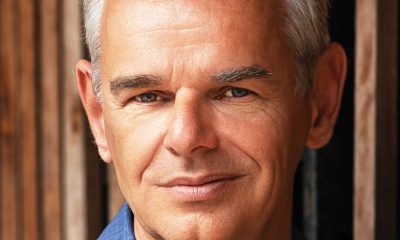
W.C. Beck delivers a balance of stillness and introspection on ”A Mostly Quiet Life”

Singer-songwriter W.C. Beck has long been admired for his reflective storytelling and innovative approach that transcends traditional musical genres. His latest album, “A Mostly Quiet Life,” invites you into a realm where quiet moments possess considerable significance. The album spans slightly over 35 minutes and comprises eight tracks, offering a delicate yet bold exploration of life’s softer spaces, infused with subtle rock undertones amidst Beck’s signature mellow vocal style.
At first listen, two tracks prominently establish the thematic duality of the album: “Every Drop of Water” and “Blue Umbrella.” The former features a slow-burning intensity, built around subtle guitar textures and Beck’s emotive vocal delivery. It captures the essence of meditation, reminding us that even the smallest gestures and overlooked moments shape who we are. Conversely, “Blue Umbrella” introduces a different shade of his artistry, filled with wistful imagery and an almost cinematic essence, blending melancholy with underlying hope.
While firmly rooted in folk traditions, Beck incorporates elements of Americana, indie-rock, and singer-songwriter balladry, resulting in a sound that feels both timeless and uniquely his own. Unlike many records that tend to emphasize either softness or grit, Beck creates an atmosphere where both can coexist, allowing for reflection without losing momentum. With this release, W.C. Beck not only strengthens his reputation as a master storyteller but also reminds us that even in a fast-paced world, there is profound power in living quietly.
The album fosters introspection by exploring themes of solitude, ephemeral love, and the beauty that can be found in stillness. It transcends the notion of a collection of songs and is more akin to a journal, a quiet yet deeply expressive chapter in Beck’s musical journey. “A Mostly Quiet Life” serves as a compelling offering, ideally suited for late-night listening or those moments when life slows down enough to be genuinely appreciated. Beck illustrates that quiet doesn’t equate to stagnation; rather, it is within these hushed intervals that music can resonate most powerfully.
For more information about W.C. Beck, please visit [website].
CLICK HERE TO STREAM W.C. Beck’s ”A Mostly Quiet Life’‘ on Spotify.
CONNECT WITH W.C. Beck |Instagram | Facebook |












Album Review
Saint Escape sets the past on fire with latest release “Look At What You Made”

Saint Escape isn’t here to reconcile the past, they’re here to torch it. Now, with the release of their new single “Look At What You Made,” Saint Escape have unleashed a punishing, nu-metal-infused anthem that just sounds like an equal measure of reckoning and release. It is loud, confrontational, and honest, exactly what a purging rock record should be.
Produced and mixed by Joe Rickard, Starset, Three Days Grace, Breaking Benjamin, the track delivers a tight punch that fuses wild aggression and arena-sized power. “Look At What You Made” doesn’t stop. Rickard’s slick production redoubles Saint Escape’s raw edge rather than sanding it down, and the song takes on a huge, modern rock sound without losing its bite.
“Look At What You Made” is a primal response to toxic authority figures, the kind who kept order through fear, misinformation, and control, and knew where best to leave emotional scars. On “Look At What You Made,” the anger boiling beneath the surface becomes something purposeful, an anthem for anyone who’s been moulded by manipulation and left in its wake. The effect is communal shake-off, a determination not to be shaped by the past.
And lead vocalist Matt Cox provides a threatening, buffed clean vocal performance, of sorts as well, one that’s heavy with anger and determination. There is rage here, but also clarity, a sense that this is less about revenge than about reclaiming autonomy. As Cox puts it, the song is a purge, a reminder that the future belongs to those willing to to take it back. “Look At What You Made” is a testament to strength and newfound independence, it’s further evidence that Saint Escape are bleeding their past into something louder, stranger, and harder to ignore.
Album Review
Big O redefines artistic evolution with “When it’s Not Said, But Done” album

Big O’s “When it’s Not Said, But Done” is a whisper of transformation narrated through rhythm, texture, and space. Across its fifteen tracks, spanning just under forty-seven minutes, Big O sacrifices flash for feeling and ego for essence.
The production feels like an artist who has finally quit chasing something external and is instead listening inward. The flow of the album is methodical but organic, with each track leading into the other as if they were diary entries. On “Free Spirit,” Big O creates a soundscape that embodies freedom in action, with rhythms that propel you forward. It’s one of those rare songs that can be at once contemplative and propulsive, with a slow revelation. And also, “New Found Joy” is an anthem for rebirth.
Big O’s production vision here is sweeping and cinematic, but also intimate. The presence of live musicians gives an organic texture. Jeronimo G’s xylophone on track nine tolls like an intimate conversation, while IB Delight’s saxophone on track ten blows satisfying warmth and longing into the mix. These collaborative moments are the crucial parts of Big O’s unfolding language.
Every choice, from the minimal artwork by Andriyan Robby to the in-house mixing and mastering by Big O himself, is consistent with the album’s spirit of transformational thought. In “When it’s Not Said, But Done,” Big O has created a statement on silent courage. It is an album for those who know that, in reality, real change does not need to be shouted from the mountaintops, but only heard, felt, and lived.

-

 Artist Spotlight5 days ago
G3 the Plug moves like a ghost on latest release “Danny Phantom”
-

 Artist Spotlight5 days ago
Xirux delivers a raw valentine’s confession with latest release “Street Love”
-

 Artist Spotlight5 days ago
Eylsia Nicolas’s quiet thank you that echoes loudly on new single “Never Stop Loving You”
-

 Artist Spotlight5 days ago
Kate Neckel’s intimacy in sound captured in one take on latest release “Awake”
-

 Artist Spotlight5 days ago
Alex Krawczyk’s gentle maps for the long way through on latest release “When The Road Is Uneven”
-

 Artist Spotlight6 days ago
Lyre Le Temps brings new orleans to life with latest release “Second Line”
-

 Artist Spotlight6 days ago
Amerakin Overdose counts down to chaos with lateset release “Time Bomb”
-

 Artist Spotlight6 days ago
A’shon Galaxy turns desire into soulful gold with “More Than Only Friends”