
Music
King Von’s Untimely Death Is Another Call For Radical Change
Getty Image The beloved storyteller wasn’t just creating a product to fetishize, he offered a portrait of a society that needs examining. …
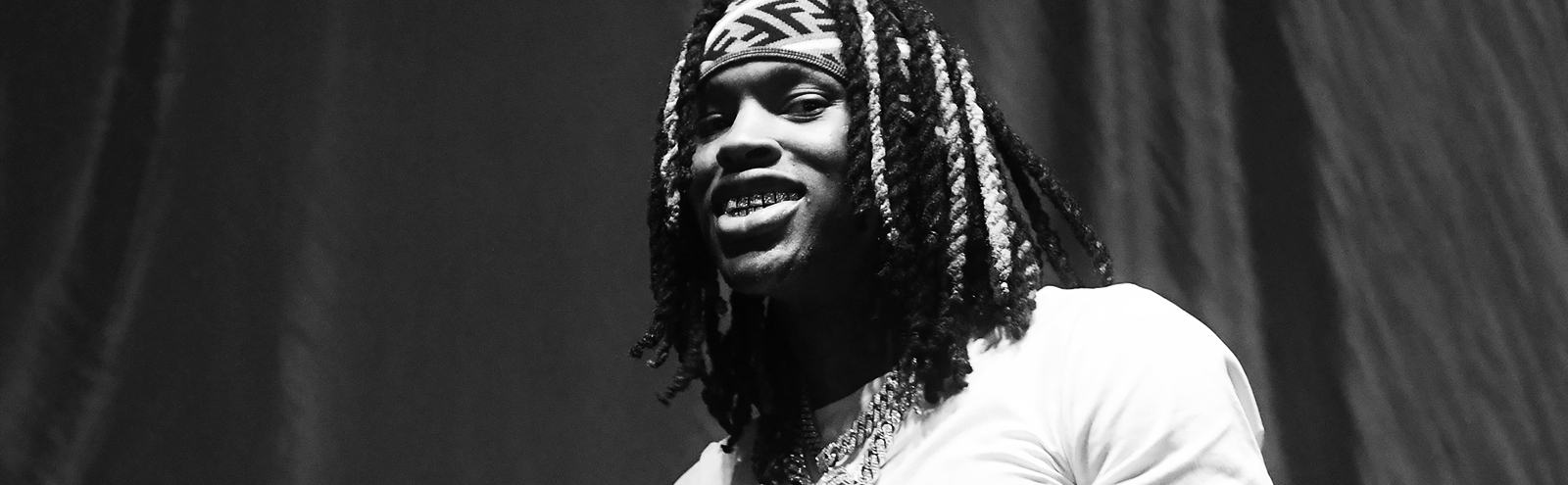
Chicago artist King Von died last Friday at just 26 years old. The rising rapper, born Dayvon Bennett, was involved in a deadly altercation outside an Atlanta hookah lounge where he and his two friends, Oblock Louie and Slutty OTF, were shot and killed. A 22-year-old Timothy Leeks was arrested and charged for Von’s murder, while there’s rampant speculation that Atlanta police shot Von’s friends.
Von grew up around the Parkway Gardens apartment complex that Chief Keef (and later Von himself) memorialized as “O-Block” in honor of the late Odee Perry, who was murdered in 2011. Von was gaining visibility as one of hip-hop’s best storytellers with songs like “Took Her To The O” and the “Crazy Story” series. A natural narrator, he rhymed with a bouncy flow that swayed like a hypnotist’s stopwatch, entrancing listeners in his stories. But now, he’s yet another seismic crater for a subgenre that loses so many of its biggest stars to jail or death.
Along with Polo G, Von was a leading figure of a long-delayed second generation of Chicago drill. But Von actually grew up with Keef, his close friend (and OTF label boss) Lil Durk, and other drill rap pioneers. He didn’t get to pursue rap until 2017, when he came home after fighting a murder charge as well as two attempted murder charges stemming from a May 2014 shooting. The charges were dropped, giving Von a second chance, and he took advantage. At the time of his death, he and Durk were fighting a case after an alleged July 2019 shooting and robbery incident, but he was still going full steam ahead musically, recently releasing his Welcome To O-Block album.
For Von, art reflected reality to a higher degree than with most rappers. After his death, a clip re-emerged of Durk telling him to stop mentioning dead rivals in his songs because “that sh*t be hurtin ‘em, for real.” There’s real pain, and real loss, behind the decades-long Chicago gang conflict. While kids are dying, fans on Reddit and YouTube have the privilege to spectate the violence as mere entertainment on pages tabulating “bodies, attempted bodies, and people clapped at” stats.
Von and Durk had a longstanding rivalry with late Chicago rapper FBG Duck, who was killed in August. Duck was from 63rd street and St. Lawrence in Chicago, an area that Von frequently dissed in songs. Von’s fans often made “not from 63rd” jokes on social media unaware, or apathetic, to the gravity of the fracture. Von had two children. Duck had four. All of them will be growing up without their fathers. But what part does each of us play in creating a better world for their children? Perhaps Duck and Von’s deaths, and the speculation that Von’s was derived from petty rap beef, will be an eye-opener for rap fans and “media personalities” all complicit in toxic flame-fanning.
Von had recalled that he and his peers went to high school with Duck and his peers. In a better-resourced community, they could have seen the benefits of unity and become the crux of a rap scene rivaling Atlanta’s. But because Chicago, like so many other areas, suffers from civic negligence that breeds poverty and hypermasculinity, they grew up on opposite “sides” and became rivals. This circumstance is a national tragedy that should register the same disdain at the American status quo as police brutality and other injustices — because they’re all branches of the same tree of systemic racism.
Before full details of Von’s death were revealed, early social media murmurs speculated that Von was fatally shot by the same cops who killed his friends. People immediately took to social media to call out the police system for once again killing an unarmed Black person. But once it was alleged that Von was killed during a fight by a young Black male instead of cops, the indictment of the establishment shifted to platitudes like, “watch how you move,” mind the “power of the tongue,” and “stay out the way.” But is America’s devaluation of Black life not what is in “the way” of our survival? There’s no hiding from anti-Blackness.
Black America rightfully centers systemic accountability in the police brutality discussion, but so often our rhetoric about intra-communal gun violence scrutinizes individual or communal accountability. Imagine someone saying that a victim of police brutality should have “moved better.” That doesn’t strike at the root of the issue. Black activists who catch snide “I thought Black lives mattered” ire after gun violence are already working for change via challenging white supremacy. But there are a notable amount of Black people who view gang violence as less deserving of advocacy than brutality victims even though it’s all state-sanctioned violence.
In the past three years alone artists like Von, Duck, Nipsey Hussle, XXXTentacion, Pop Smoke, Jimmy Wopo, Lil Marlo, and Huey, among too many others, were fatally shot. They were from different areas, living different lives, but all fell prey to the machinations of a country that often exploits and benefits from Black death. America depends on systemic inequality, and violence is a manifestation of poverty. Every billionaire’s material excess has to be juxtaposed against the excess toll of Black lives lost to the brutal conditioning of survival mode. Even when artists like Von “make it” they can’t easily shake such a traumatized mentality. Judging from ominous Von lines like “if I should die, I’m boostin’ the murder rate” from the recently released “I Am What I Am,” he, like so many artists, saw premature death as an inevitability. That brand of fatalism represents a purposeful failing by the system.
Victim blamers can say what they want about his diss records, and at-times antagonistic social media presence, but the inarguable reality is that no matter his individual conduct, he would still be living in a dangerous world. Solving this problem isn’t about “moving right,” it’s about the social movement against systemic oppression. In so many cities and towns, the communal chasm may be too deep to heal this generation’s ill-will toward each other. But if people are given opportunities, they will by and large prioritize their personal growth over risking their freedom and lives for violence. And from there, the hope is that things will only improve over the next generations. That starts with a push for radical change. Economic deprivation, school-to-prison pipelines, predatory police, and for-profit prisons all have to go. Everyone deserves access to public resources that will offer them a productive life. As things are now, too many people start out in disadvantaged areas and have to navigate life on a wayward journey.
So many music consumers are comfortable experiencing the Black struggle as mere entertainment. That’s a reflection of America’s overall disregard for Black lives. It was hip-hop’s expansion into white suburbia that inspired the genre’s commercial boom; vicarious curiosity sparked the industrialization and mass consumption of our trauma. But Von wasn’t just creating a product to fetishize, he offered a portrait of a society that needs examining. It would be a fitting tribute to his gift, like that of many other artists, that listeners hear their stories and ponder how they can play a part in dismantling the social factors that force so many talented young people to live and create in survival mode.

Artist Spotlight
MTS Management Group artists celebrates friendship with new release “A Song for My Friends”

MTS Management Group artists’ latest release, “A Song for My Friends,” is a happy, upbeat song that captures the magic of being together, celebrating, and remembering. The track has a contagious energy that is like the spirit of late-night jam sessions and sing-alongs that happen out of the blue. The production is clean and smooth, but also laid-back.
The tune of “A Song for My Friends” is a toast, and it’s clear what the band wants. A party for the people who have been there since the beginning, the fans who keep coming back, and the nights that artists will never forget that remind them why they fell in love with music in the first place.
“A Song for My Friends” stands out in a world full of overproduced singles because it has heart, energy, and honesty. It’s a moment we shared that I put in a bottle and sent to you with a chorus that you’ll be singing long after the music stops.
Connect with MTS Management Group artists on Instagram || Facebook || Twitter
Artist Spotlight
Michael Soul hides from being open with new release “Hiding”
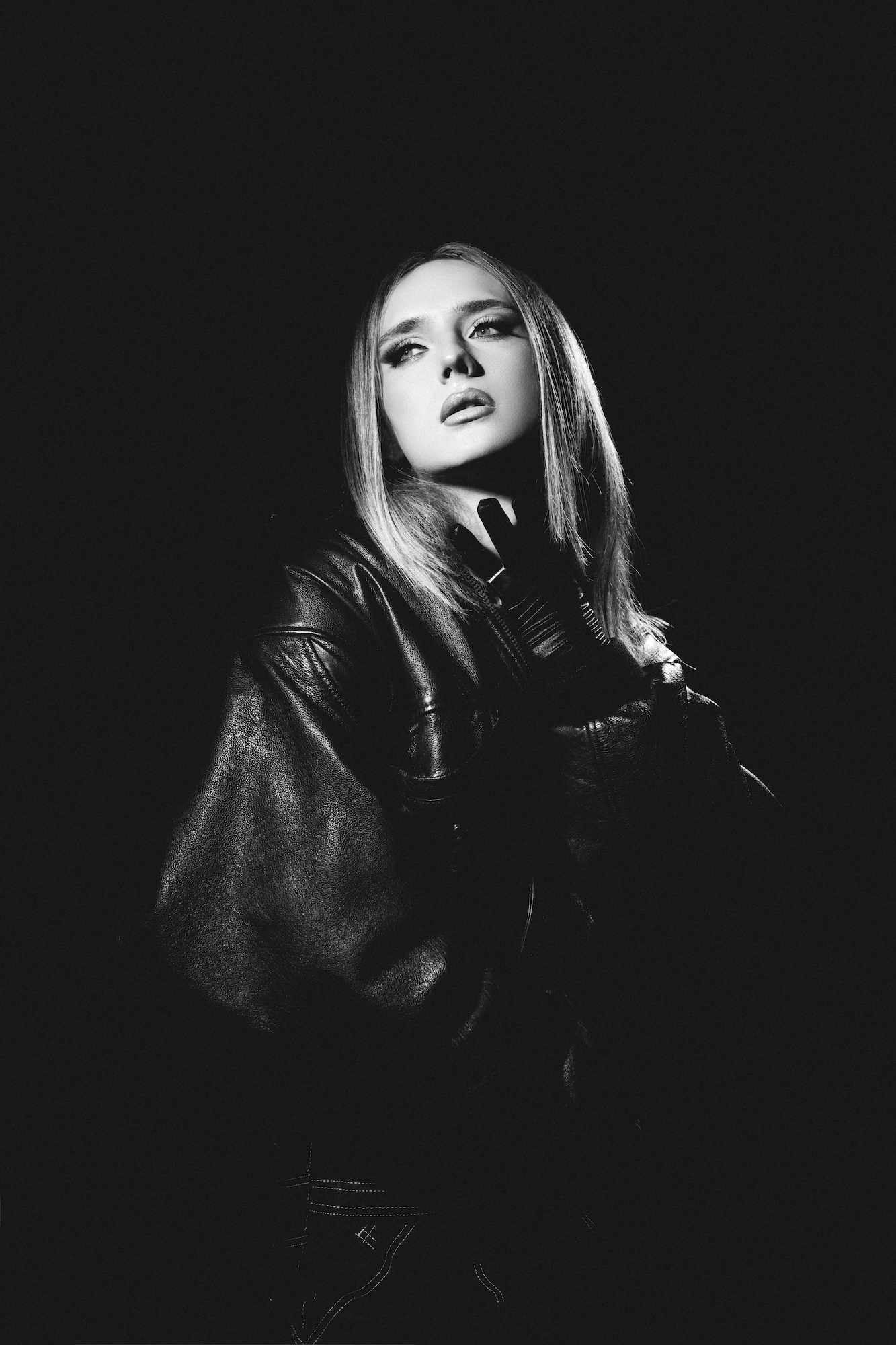
Michael Soul’s new single, “Hiding,” is a dark, hypnotic electronic track that takes listeners to a private place in their minds where they are alone, thinking, and feeling upset. “Hiding” was written when the author was very lonely. Michael Soul turns days of being alone, when silence seemed to last forever, and connection seemed impossible, into an immersive sound.
Andrea Mastroiacovo’s polished work makes the single even better, clarifying and deepening the song’s dark mood. The production carefully reflects that emotional weight with simple textures and dark electronic sounds that make you feel like you’re alone with your thoughts.
“Hiding” is a song about feeling alone, scared, and wanting to hide from being open. It asks questions that are quiet but sharp, like why do we hide what we feel? How does fear ruin love? And can we stop going in circles of misunderstanding and emotional distance? These echoes linger long after the track ends, prolonging the sound.
Connect with Michael Soul on Spotify || Instagram || Youtube ||Soundcloud

-

 Artist Spotlight6 days ago
Philly and Suzy poke fun at politics with “Dirty Little Girl”
-
 Artist Spotlight6 days ago
Matt Johnson breathes new life into “For Good” with a solo piano interpretation
-
 Artist Spotlight6 days ago
PJ Far-West Selecta drops roots reggae single to lift spirits on “Jah Jah Riddims”
-

 Artist Spotlight4 days ago
François Marius & Bérénice turn moments into magic with “Happy Day”
-

 Artist Spotlight6 days ago
Eylsia sings faith and healing in every note on “He Walked Among Us”
-

 Artist Spotlight4 days ago
Vibrational Match serves up light and breezy vibes in “On a Sunny Shore”
-
 Artist Spotlight4 days ago
Spiros Exaras blends jazz with greek roots on “Kalamatiano Medley”
-

 Artist Spotlight6 days ago
SweetCandy! and LAF822 flip the script in “Christmas in May”