
Entertainment
Method Man & Redman’s “Da Rockwilder” Is One Of Hip-Hop’s Best Duets
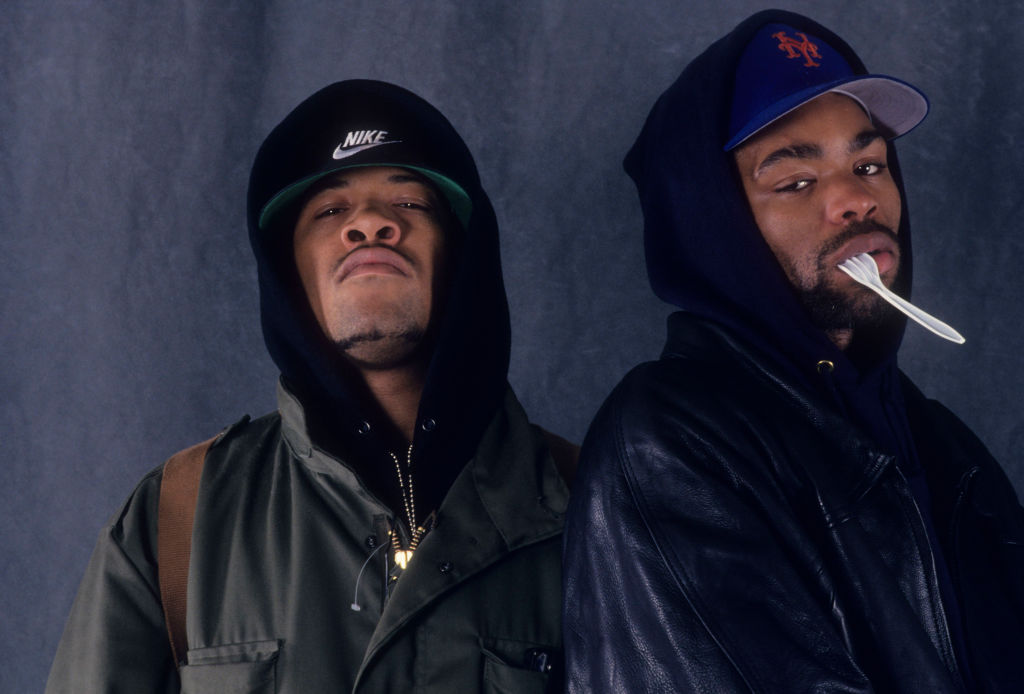
When the topic of a timeless song is brought up, it’s hard not to turn to those with certain qualities. It can be emotional resonance, as in the case of Nas’ “Dance,” Eminem’s “Deja Vu,” or Kendrick Lamar’s “Love.” It can be a compelling narrative, like Immortal Technique’s “Dance With The Devil” or Jay-Z’s “Meet The Parents.” There are plenty of reasons a track can not only withstand the test of time, but gain renewed life as it ages. Twenty-one years removed from its initial release, Method Man and Redman’s “Da Rockwilder” has never sounded better. There’s a strong case to be made that it’s a perfect rap song; perhaps even one of the greatest duets of all time. Yet it shines without pushing any particular boundaries, rather making the most of its simplicity through an excellent beat and electric performances from Tical and Reggie Noble.
Clocking in at two minutes and twenty-six seconds before it was cool, Red and Meth’s Blackout single barely has room to breathe. And still, there’s more content to unpack here than in many songs twice its length. That’s largely in part to the three main contributors, beginning with the track’s namesake. Songs are barely, if ever, named after the producer that laces them. So the story goes, Method Man christened the track in Rock’s honor, after he was inspired enough to write his verse on the spot. Speaking with Complex, Meth explained that Redman didn’t actually feel the instrumental at first, fueling him to double down and lead by example. “Red didn’t like the beat, that’s why the record’s so short. When I first heard it, I was like, ‘Fuck that!’ Wrote my verse right there and spit on it and I was like, ‘You know what? We gon’ call this shit ‘Rockwilder’ after you.”
Al Pereira/Michael Ochs Archives/Getty Images
It’s hard to imagine someone having a negative response to the production. Opening with a tense build-up, wailing alarm bells over cinematic synthesizers, the soundscape proceeds to unfold into a steady pulsating groove. Rockwilder’s restraint goes a long way, his strategically placed drums landing precisely where they need to be. It’s mainly Method Man who benefits from this heightened anticipation, his words dexterously keeping stride with Rock’s rhythm. When the drums do land in full, with all the force of several rampaging elephants at that, Method Man uses the opportunity to flex his flow with a clever segue. In fact, Method Man’s entire opening verse is a masterclass in emceeing for a variety of different reasons.
Consider that Method Man’s solo career at that point consisted of two albums, Tical and Tical 2000; the first hailed as a classic, the second not so much. He was also a key contributor to the Wu-Tang Clan, who had already asserted their dominance with records like Enter The Wu-Tang and Wu-Tang Forever. As such, his artistic history was already rich with lore, which he quickly alludes to in his opening “Rockwilder” lines. “Microphone checker, swingin’ sword lecture,” he spits, calling back to his Shaolin lineage. “Closing down the sector, supreme neck protector.” In the following lines, he also makes reference to another one of his personal classics, the DJ Premier Limp Bizkit duet “N 2 Gether Now.” Like a bard immortalizing their accomplishments through song, Meth peppers “Da Rockwilder” with enough unique references to make it feel special for his longtime fans.
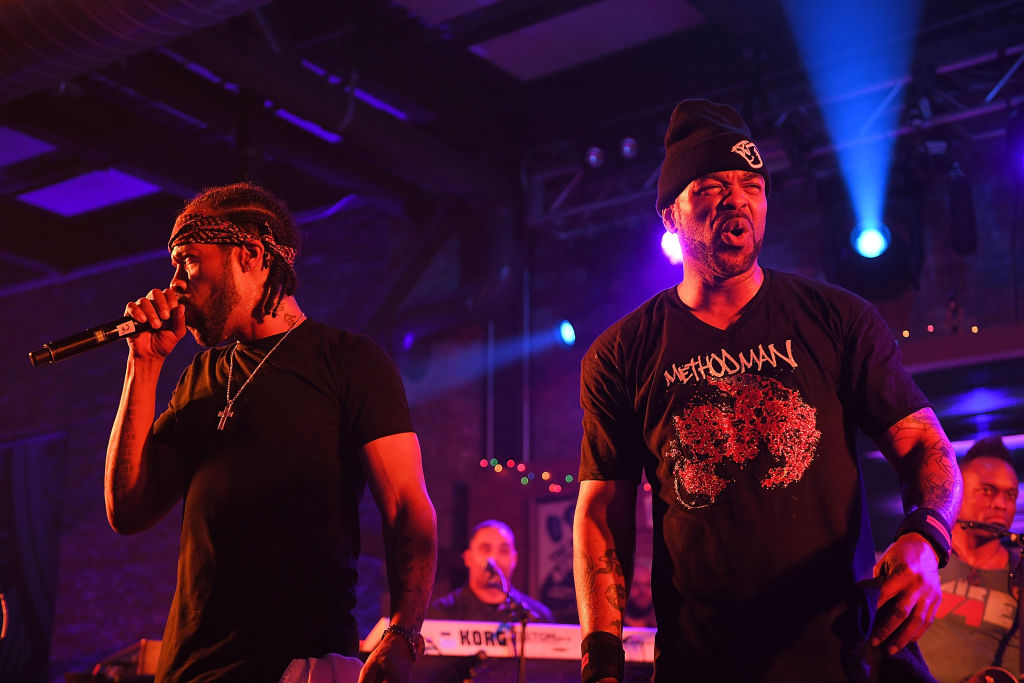
Matt Winkelmeyer/Getty Images
If understanding Meth’s verse to the fullest requires a casual familiarity with his legacy, Redman’s verse requires something far more potent. There’s a reason why Eminem, himself a master of the reference, so deeply admires the pen game of Reggie Noble. Not only does his pivot into his own verse with flair, but he does so while firing off layered and vivid bars; though his effortless flow is highly acceptable, his lyrics are not designed to be skimmed in the slightest. “When I grab the broom, Moonwalk platoon hawk, my goons bark, leave you in a blue lagoon lost,” he spits, a threat that in itself requires a thorough examination to unpack. Not many rappers conjure such specific imagery, but Redman’s unique vernacular is full of surprises. “All channels, lift my shirt, all mammal,” he boasts, always opting to take the linguistic scenic route. A feat all the more impressive given that his verse is only active for about thirty seconds. Still, both parties still manage to fill their verses with more personality than countless rappers could ever dream of doing.
Of course, Redman and Method Man are two larger than life emcees, exuding charisma with every line. By the time Blackout released in 1999, both men were already accomplished artists in the game — the fact they managed to deliver one of their most energetic and memorable tracks so deep into their respective careers should not be undervalued. Not only did “Da Rockwilder” help propel Redman and Method Man into the conversation of great hip-hop duos, but it helped further launch the career of the producer who tied it all together. It wasn’t uncommon to see Redman and Method Man play the track multiple times in the same concert, not unlike Kanye and Jay-Z used to do with “N***as In Paris.” In fact, both songs seem to share a similar appeal; lyrical bangers brimming with personality and held together by an instantly infectious instrumental. There are really no flaws to be found, and those reckless enough to actively go searching are destined for the lagoon. Show some appreciation for one of rap’s great duets, a classic that undeniably gets love — but not nearly enough.











Artist Spotlight
Marsha Bartenetti reinvents in her own style “New York Minute”

Marsha Bartenetti’s latest release, “New York Minute,” written by Don Henley, Danny Kortchmar, and Jai Winding, offers emotional depth, turning a timeless look at life’s fragility into a reflective, cinematic journey. Stephan Oberhoff’s arrangement perfectly frames Bartenetti’s voice, and Kevin Bate’s expressive cello adds a warm resonance that makes the track feel like a movie.
The way each instrument sounds makes it feel planned, which lets the listener stay in the fleeting moments the song so beautifully describes. Bartenetti’s singing is the best part of the song. She shows an openness that feels real, as if she has lost something and still fully embraces love and presence with complete honesty. Her choice of words and small changes in tone make the lyrics feel even closer.
“New York Minute,” is a new version that pays tribute to the original while showcasing Bartenetti’s own style. The movie-like instruments and heartfelt vocals make the song feel both personal and universal. It makes us think about how hard it is to let go and hold on.
Artist Spotlight
“Yonkers” – Song by Tyler, the Creator
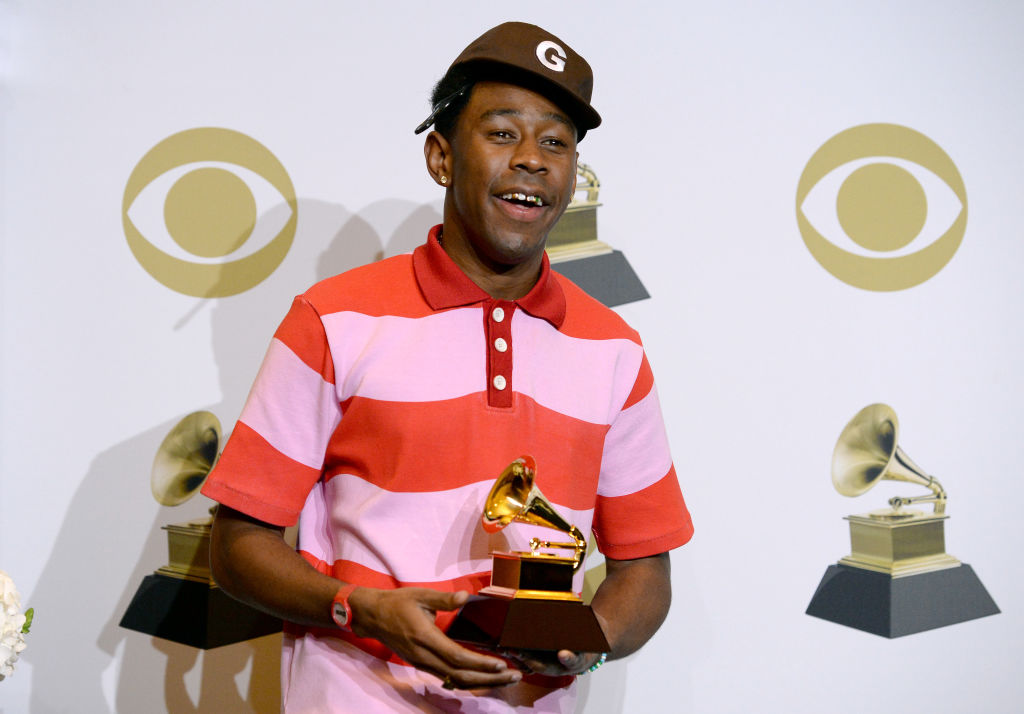
15 years ago, Tyler, the Creator released “Yonkers.” The song would go on to shape a generation of hip-hop fans and make him one of the most talked-about artists in modern music. Tyler’s work on “Yonkers,” which came out of the Los Angeles group Odd Future, was a brave mix of raw lyrics, dark humor, and simple production that made him stand out from other artists right away.
“Yonkers,” which is just over three minutes long, seems simple but has a big effect. The song’s production is based on a spooky bassline, simple piano chords, and simple drums. This puts Tyler’s voice and story front and center. His flow is slow and threatening, and it sends out a stream of verses that balance shock value with deep thoughts on themes like being alone, rebelling, and thinking about oneself. This song has a modern twist on the gritty, confrontational style of hip-hop that was popular in the early 2010s.
The music video for “Yonkers” became a cultural phenomenon all by itself. In the black-and-white video, Tyler looks straight into the camera while doing something that surprised both fans and critics. Tyler became known as an artist who isn’t afraid to push boundaries when the song’s raw lyrics and stark images quickly went viral. The video’s viral success brought Odd Future national attention and helped Tyler get more work, including his albums Goblin (2011) and Wolf (2013), which were both well-received by critics.
People who didn’t like “Yonkers” thought it was a new take on hip-hop. People in the genre often liked flashy production and collaborations, but Tyler’s solo song showed that minimalism can be just as interesting, if not more so, when it has strong lyrics. Young people who wanted realness and change connected with the song’s unapologetic tone, and its influence can still be heard in music today. Many contemporary artists assert that Tyler’s early compositions, particularly “Yonkers,” significantly influenced their lyrical writing and visual storytelling techniques.
“Yonkers” was a big moment in Tyler, the Creator’s career. It was a bold statement from a single artist who wanted to change the rules of hip-hop, and it captured the spirit of early Odd Future, a group that thrived on chaos, creativity, and free expression. More than ten years later, the song is still a touchstone for fans and a turning point in the growth of alternative rap. Its creepy beat, controversial lyrics, and viral music video are still seen as examples of a time when hip-hop was pushing its limits and welcoming a new generation of voices that were willing to question the way things were.
“Yonkers” is a cultural artifact, a snapshot of the time that shaped Tyler, the Creator’s unique artistic style, and a reminder of how powerful bold, unapologetic music can be.

-

 Artist Spotlight6 days ago
François Marius & Bérénice turn moments into magic with “Happy Day”
-

 Artist Spotlight6 days ago
Vibrational Match serves up light and breezy vibes in “On a Sunny Shore”
-

 Artist Spotlight6 days ago
Spiros Exaras blends jazz with greek roots on “Kalamatiano Medley”
-

 Artist Spotlight6 days ago
Mracks paints city life in new release “Cornerstore”
-

 Artist Spotlight6 days ago
Una Lengua Infinita releases gentle string quartet piece on “Bajo un cielo cuadrado”
-

 Artist Spotlight4 days ago
MTS Management Group artists celebrates friendship with new release “A Song for My Friends”
-

 Artist Spotlight4 days ago
Michael Soul hides from being open with new release “Hiding”
-

 Artist Spotlight4 days ago
Grace Doty lights up the sky with new release “Sunset Colors”