
Featured
J. Cole Reveals Feeling The Pressure of Being ‘Outshined’ by Kendrick Lamar After “Good Kid, M.A.A.D City”

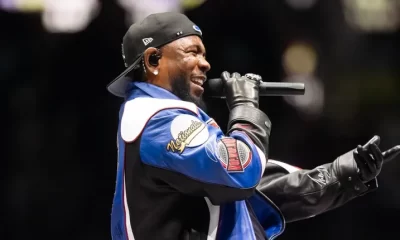
Competition can catalyst people to achieve greatness, a sentiment echoed by artist J. Cole. However, it also brought an uncomfortable realization when Kendrick Lamar’s influential album “Good Kid, M.A.A.D City” took the world by storm in 2012. During a recent episode of his “Inevitable” audio series, Cole peeled back the curtain on the release of Kendrick’s seminal album. He admitted experiencing a significant wave of pressure and disclosed how it compelled him to confront the disquieting possibility of being ‘outshined’ by his fellow artists.
Cole and his manager, Ibrahim “Ib” Hamad, captivated fans by playing unreleased collaborations with Kendrick and elucidating the story behind them. Their creative partnership originated during the “Club Paradise” tour when Kendrick visited Cole’s Fayetteville, North Carolina hometown. “We worked on that studio bus for two or three days,” Cole recalled. “It felt like when your cousin would come to your house.” While their sessions were creatively charged and carefree, Kendrick was already on the cusp of something monumental.
Cole vividly remembered hearing early tracks from “Good Kid, M.A.A.D City” and recognizing the impending transformation that was about to occur. “When Kendrick’s album dropped, the journey got harder, the mountain got steeper,” he admitted. In the album’s wake, Cole saw the game differently. “It was a feeling of surpassment,” he explained. “His first-week numbers were more than mine. And then we had a show where I went on before him, and he performed after me.”
This scenario extends beyond mere metrics or performance playlists; it fundamentally concerns ambition. For J. Cole, the ascent of Kendrick Lamar was not just a competitive challenge but also a manifestation of his insecurities and the elevated standards they both aspired to achieve. He likened it to the release of Drake’s “So Far Gone,” describing this period as yet another indication that he was not the sole artist with grand aspirations. J. Cole’s frankness reminds audiences that even highly successful individuals grapple with self-doubt and obstacles. Nevertheless, how they respond to such challenges, alongside their capacity to adapt, progress, and maintain perseverance, ultimately shapes their enduring legacy of excellence.
Despite the initial sting of being compared, Cole’s vulnerability speaks to the realities of artistry in an industry built on constant competition. This experience is less about rivalry and more about personal growth. By reflecting on these pivotal moments, Cole’s honesty adds an enriching sense of humanity to his journey. The mutual admiration between him and Kendrick runs deep, evident in their unreleased tracks, which serve as snapshots of their evolving paths.
What could have evolved into a story of conflict instead emphasizes the beauty of mutual inspiration and friendship, a dynamic relationship that continues to shape the future of hip-hop. For Cole, Kendrick’s success did not signify the conclusion of his story but the impetus for the subsequent artistic adventure.












Artist Spotlight
Fanny Alexandra explores emotional recovery and self-discovery on “Ceasefire”

Not every fight ends a relationship, and there could be long-term emotional damage, with questions about identity, attachment, and the difficult path to moving on. “Ceasefire” is a ghostly alternative rock ballad in which Fanny Alexandra navigates difficult terrain, exploring emotional dependency and the search for selfhood after a toxic relationship.
“Ceasefire” is full of sad melodies and hints of atmospheric rock, making it a dark, cinematic listen. The song’s alt-rock pivot provides an emotionally charged foundation, and it’s about the internal battle, especially when your identity has been so tied to another person.
Fanny Alexandra’s ethereal vocal approach suits the song, lending real emotional weight to the exploration of self-loss and internal tension. “Ceasefire” is a reflective track, with atmospheric instrumentation and deeply personal songwriting that capture feelings that can linger long after a tough chapter closes.
It’s about finding yourself again, and its emotional arc moves from openness and dependence to the hard-earned discovery that personal freedom is more than just walking away. Fanny Alexandra’s love for dark, emotional alternative music inspired “Ceasefire.” Her art is about intimate storytelling, cinematic atmosphere, and making music that explores the quieter struggles people tend to keep inside. In this record, she turns the fallout from a toxic relationship into a meditative reflection on the long road to selfhood.
Artist Spotlight
Stephani Ezatoff honors Elvis Presley’s legacy on powerful new single “Run On”

Gospel-rooted music carries emotional weight, especially when it explores the tension between faith, love, and accountability. With “Run On,“ Stephani Ezatoff combines these into a rock version of Elvis Presley’s famous 1967 version of the traditional African American gospel hymn.
Ezatoff doesn’t simply retrace history but surrounds it with a unique atmosphere of powerful vocals and an ever-intensifying arrangement. The single was recorded at the legendary Sound Shop Studio on Music Row in Nashville and has an interesting connection to Elvis Presley’s own recording history. The studio session was located a stone’s throw from RCA’s Studio B, where Elvis recorded his own version of the hymn.
This adds another layer of meaning to an already meaningful release, placing Ezatoff’s take within Nashville’s musical heritage. Aaron Minick’s arrangement plays on the contrast between divine love and judgment, which is central to the track’s identity. The production builds slowly, and the song becomes a dramatic, cinematic experience. Ezatoff also makes a unique contribution by singing all the vocals herself.
The story of how the recording was made adds to the poignancy of “Run On.” This is one of the last releases made at Sound Shop Studio, which hosted artists like Dolly Parton and Brenda Lee, but closed for good just days after the session. For Stephani Ezatoff, “Run On“ is a vital link between generations of musicians preserved in a recording that’s a piece of Nashville history.

-

 Album Review3 days ago
Legends of the Seven Golden Vampires explore healing and personal growth on “The Pumphouse of Broken Dreams” [album]
-

 Artist Spotlight3 days ago
Ricky’s Rebel Rabble honor family and remembrance through “Molly”
-

 Artist Spotlight4 days ago
T1M1 featuring Keybeaux confront artificial creativity with latest release “Hip Slop”
-

 Artist Spotlight3 days ago
for KING & COUNTRY celebrate faith and everyday joy on “the most beautiful colours”
-

 Album Review3 days ago
Brynja Rán finds clarity in complicated relationships on “Unblurred” [album]
-

 Artist Spotlight4 days ago
Lil Bales unveils a love bomb on latest release “Rust”
-

 Artist Spotlight1 day ago
Boy Sim explores heartbreak and self-deception on “Cloud Nine”
-

 Artist Spotlight4 days ago
Terry Ennison examines faith, illusion, death, and transformation on latest release “Testimonial”