
Artist Spotlight
Chapell’s “The Underground Music Show”

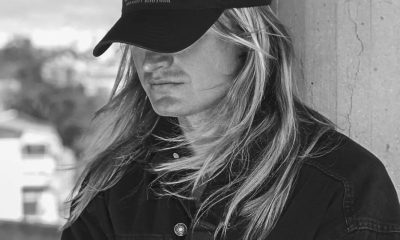
There’s nothing quite like Chapell’s The Underground Music Show in the modern musical universe.
I assert that this is a good thing. We don’t need any more cookie-cutter singer/songwriter fare full of quavering sensitivities. Nor do we need paint-by-numbers noise merchants peddling oh-so-indie guitar albums that wear their oddities on their sleeves. Chapell is, unashamedly, himself and nothing more.
The Stamford, Connecticut-born performer and songwriter discovered initial notoriety as a fifteen-year-old prodigy working with Dirty Dancing producer Jimmy Ienner. He later led the East-West fusion outfit Kalki. His tenure with that band served notice that Chapell wasn’t content with finding fame as a garden variety song and dance man. He had bigger fish to fry.
The peak of his musical journey so far comes with the formation of the band bearing his name. Chapell’s 2016 debut, The Redhead’s Allegations, produced by Talking Heads’ Jerry Harrison, illustrated Chapell’s mammoth growth as a songwriter and human being. Two successors, Soul Man and Love in the Summer of Trouble, solidified his direction and garnered him a loyal following.
I believe it bodes well for the album’s remaining songs when an artist leads off with the title track. There’s a long tradition of this kind of track listing signaling a wellspring of self-assurance. It’s justified in this case. “The Underground Music Show” sets the stage for everything following it. One of its primary merits lies with the vocals. Chapell has an idiosyncratic voice, and further strengthens the singing with The Crush Boys’ backing vocals. Marrying thoughtful lyrical content with the pop predilections of this opener establishes a template that Chapell won’t desert.
However, I’m glad to report there are ample variations. He doesn’t follow a single path. The bright piano-laced pop balladry of “The Space Between Us” is an excellent follow-up to the opener. He builds the song from relatively restrained beginnings into a robust march that simmers with energy. Chapell continues indulging in anthemic pop with the album’s third cut, “When the Music Plays Again”. Violinist Lorenza Ponce is one of the underrated musical forces driving many of these cuts and plays with great confidence throughout this track.
I wondered going in if Chapell was covering John Lennon with the plaintively titled “Grow Old with Me”. However, it’s another outstanding original. He pursues a jaunty trajectory that eschews the anthemic tendencies of the preceding songs in favor of an irresistible pop bounce. “I Used to Say This Could Never Be Me” steers The Underground Music Show into different textural waters. He scaffolds his lyrics about the ironies of getting older around a loping tempo with a surprising amount of swing. It’s one of his best vocals on the release, and he tosses in several understated moves into the imaginative arrangement.
The relaxed gait of “When Sally Left” juxtaposes nicely against a nuanced and often vigorous Chapell vocal. This tune packs an unexpected punch and comes at an ideal place in the album’s track listing. “Like We Just Met” is The Underground Music Show’s penultimate tune, and its hypnotic piano motif supplies an important musical hook for the song’s success. It’s another of the vocal high points with a strong central performance from Chapell and astute multi-tracking scattered throughout the cut. Chapell’s The Underground Music Show harbors a bounty of rewards that listeners won’t readily exhaust. I advise you to check it out today.
Skyler Voss












Artist Spotlight
SweetCandy! reveals the truth behind new release “ISOLATED DISPOSITION”
SweetCandy! latest release of “ISOLATED DISPOSITION,” a single that doesn’t just talk but also confesses, opens up a very open space. The song was written right after a fight, and it has a lot of emotional baggage that most artists would be too scared to show. SweetCandy! doesn’t give up, it pushes all the way in.
“ISOLATED DISPOSITION” is how isolating it feels to be alone and not understood. But instead of blaming others, the story looks inward and reveals a deeper truth, being alone can often be a choice. The song gets to the point, shutting down only makes the emotional distance between us and others bigger.
There isn’t any effort to make things better or hide the pain, SweetCandy! talks openly about how hard it is to want to be understood while also keeping things that would help people understand you. A lot of people who hear it will know right away that it doesn’t make sense.
“ISOLATED DISPOSITION” seems like a turning point in the end. It shows that people are ready to be more responsible, grow, and be honest with each other in the future. SweetCandy! makes it clear that being open about your feelings isn’t a sign of weakness, it’s the way to be truly seen in a world where it can feel dangerous to do so.
Artist Spotlight
Shweta Harve sings of love that stands strong like a Tree on “Have You Loved Like a Tree?”

Shweta Harve’s latest release, “Have You Loved Like a Tree?” gently prompts listeners to reflect on how we think about love today. She uses a tree as a metaphor to show that love is stable, patient, and unchanging, rather than short-lived or performative.
Harve takes listeners to a place where they can think about their own experiences and the emotional truths they share with others. At its most basic level, the song is about unconditional love, love that gives without expecting anything in return, protects without being seen, and is always there even when you don’t see it.
The lyrics say, “Just like a tree, I will never fold / I will only give, endure, and grow / I’ll hold you close, I’ll let you go,” which is the heart of the song. Harve paints love as something that endures through storms, distance, and silence, just as trees endure through changing seasons. That picture has a quiet power that stays with you long after the song is over.
Connect with Shweta Harve on Youtube

-

 Artist Spotlight4 days ago
Jonathan Zogbi reaches new heights with new release “Sky High”
-

 Album Review5 days ago
Dian Sheng explores identity, life and love with “Sid” album
-

 Artist Spotlight3 days ago
Shweta Harve sings of love that stands strong like a Tree on “Have You Loved Like a Tree?”
-

 Artist Spotlight3 days ago
Reetoxa captures a fleeting moment in new release “Thrift Shop Dress”
-

 Artist Spotlight5 days ago
Feel the vibe with Sporty-O’s new EP “The P.L.U.R. Project,” a blend of emotions and sound
-

 Artist Spotlight3 days ago
Reetoxa sings about being alone but still creating something meaningfulwith new album “Soliloquy”
-

 Artist Spotlight3 days ago
SweetCandy! reveals the truth behind new release “ISOLATED DISPOSITION”
-

 Artist Spotlight6 days ago
Dax turns years of questions into new release “God, Can You Hear Me?”