
Entertainment
The Weeknd’s “High For This” Is For The Youth

An eerie, ominous ringing in your ears. That is how House of Balloons begins, and it is a sound that many have come to recognize instantly as “High for This.”
It’s just one sound, but it is foreboding in nature. It’s the type of sound you would expect from a horror film, as the protagonist creeps around the corner of a narrow hallway, and for a moment, you are unsure if she will be saved– sure enough, she meets her doom. It’s the type of sound that comes before something else. It is a leading sound. Or perhaps, it’s the type of sound that comes after something. It’s the pulsing sound you might wake up to after a night out that you can no longer remember. The type of ear-splitting sound that pervades your head, eventually transforming into a full-on headache, as your eyes, slightly stuck together with sleep, attempt to open and determine where exactly you’ve landed. You’re not quite yet familiar, or perhaps you don’t quite remember your surroundings, and as you put the pieces into place, the ringing may or may not subside.
Either of these scenarios would seem likely for The Weeknd’s House of Balloons. However, since we are referring to “High for This,” it is more likely the latter; the post-drug-binge haze that one has to eventually wake up from.
As the ringing sound echoes louder and eventually becomes distorted and muffled, The Weeknd’s voice comes to the forefront: “You don’t know what’s in store / But you know what you’re here for.”
Apt words, considering we did not yet know, back in March of 2011, what we were in store for: a trio of mixtapes that would ultimately change and upend the landscape of r’n’b, and even go so far as to influence hip-hop’s sound and culture. Yet, we did know why we were here. A handful of leaks ahead of House of Balloons had assisted in giving the mysterious artist a bit of online momentum at a time when blogs were still the de-facto way of receiving new music– and to that effect, Drake’s own OVO blog was at this time updated quite frequently with “cool content”– including The Weeknd.
Clinton Gilders/FilmMagic/Getty Images
House of Balloons’ opener “High for This” acts almost like a mission statement from Abel, one that would map out his modus operandi at that time of his life (with the project at large completing the picture). As someone of similar age to Abel, and thus, equally youthful nine years ago, his was the sort of practices and lifestyle I could get behind– like many millennials.
House of Balloons, and the Trilogy as it would eventually be known, is something wholly for youth culture. It’s unabashed in its drug use and scope, and there is a singular focus on living for lust-filled nights. The Weeknd’s music at this time wasn’t about the future, it was about the present moment, and all that consumes an adolescent or young adult– mainly social concerns (read: having/making/being with friends) and getting obliterated with said social concerns. We had yet to hear Abel’s type of transparency about our main topics of interest on wax, such obvious references to the activities we all dabbled in, and thus we instantly gravitated towards it. Records such as “High for This” were able to create an instant kinship between Abel and the fan, simply because the music felt highly personal– and for the fan, who may be following The Weeknd’s lead in that they too, are high for this, that connection would feel even more profound.
The older we get, the less inclined we are to socialize, and the smaller our circle of friends becomes. It’s a natural effect of maturation. There are studies that document this, noting that it tends to occur around the age of 25. And as we get older, while it’s not a guarantee, there is the idea that one would become less consumed by the material, and more driven by the intangible. Meaning that, desires shift, and a focus on relationship, work and overall life-building becomes the norm, which also means that there is less time spent towards ultimately fruitless endeavours like getting wasted and going out until 5 am.
“The mind of a 19-year-old is very different from the mind of a 26-year-old. You grow. You get into better relationships. You experience more, meet more people, better people. But when you’re in a dark hole, at an earlier point in your life – you write about the mindset you’re in at that moment,” Abel once told The Guardian about the Trilogy era of his life. This encapsulates the idea that, while his Trilogy music may not service us in the same way it once did, it still provides value for any present-day 19-year olds, as it contends with their phase in life. That is the thing about The Weeknd’s early music: it was immature. Its appeal was primed for the misguided, the jaded, the constant party-er, and often, these types of traits are tangled together in the adolescent.
“High for This” in both song and concept is simple. Its simplicity is another characteristic that would appease the youth, despite it’s four-minute length, the record can and should be taken at face value. There are only two short verses, and the rest is a feeling (or as the kids say, vibe) that’s caught up in the production. Where Doc Mickinney and Illangelo became known as The Weeknd’s main producers, the ones who helped curate the Trilogy sound, it is Dream Machine who helps open up House of Balloons’ “High for This.”
Christopher Polk/Getty Images
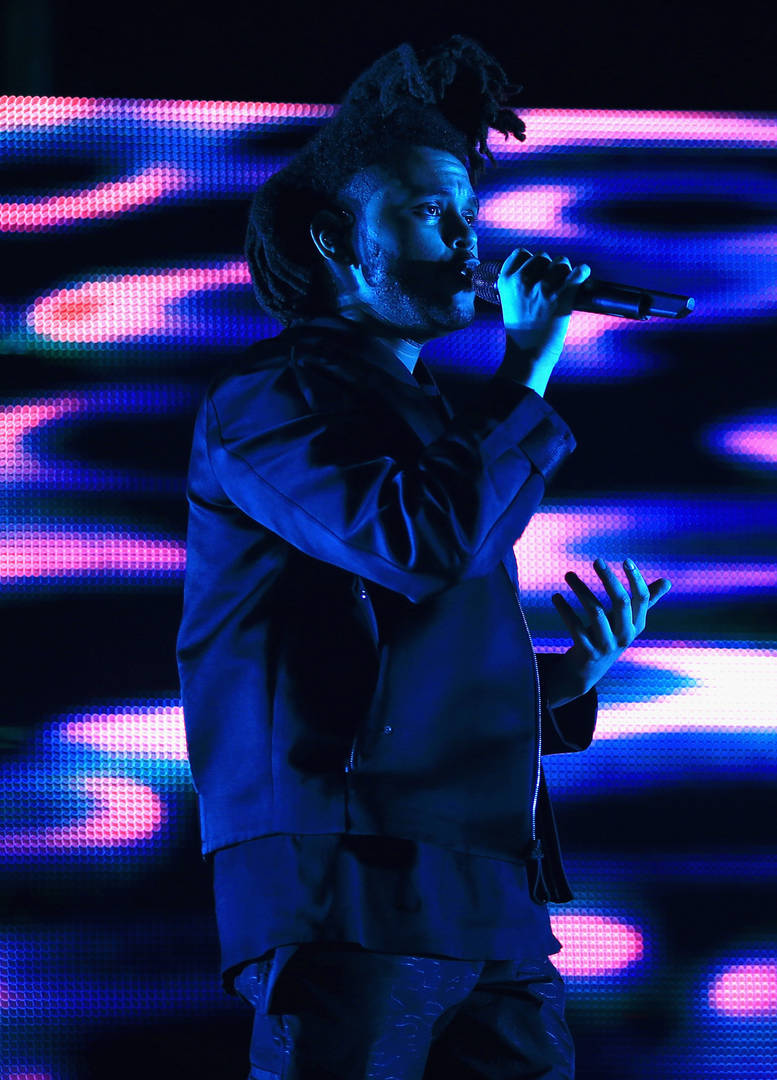
The Weeknd sings in his first verse as though he is on an MDMA-influenced high, riding a wave of sensuality that has become synonymous with taking the drug. “Take it off, you want it off / Cause I know what you’re feeling / It’s okay, girl, I feel it too / Let it be, baby breathe I swear I’m right here / We’ll be good, I promise, we’ll be so good,” — these words could ostensibly be relayed from one rolling person to another, combining the need for reassurance with the need to feel good. The song ushers you in both sweetly and sinisterly, a definitive trait of The Weeknd’s music.
Captured in the production, is the swelling nature of becoming high. As you listen, the production goes from vacant and subdued to monstrous and overwhelming, eclipsing with a surge of drums and vibrating synths. We can consider this the “beat drop” in a way. A “beat drop” is typically relegated to an EDM banger, and insinuates that the turn-up has arrived– the idea being that the “beat drop” feels particularly great for anyone who is on a synthetic high. The same could be said for this type of grand climax on “High for This.”
Where EDM may have been the music-of-choice when it comes to many pill-popping, recreational and social drug users around 2011, The Weeknd provided us with an alternative. An alternative that not only revelled in drug use, but was music created specifically by, and for, this reason (“High for This” being among the most obvious, due to title alone). It was refreshing, because we hadn’t heard anyone discuss dark night life on an r’n’b-leaning record previously, all the while we had been dabbling in similar forms of diversion.
The Weeknd created a soundtrack for these types of nightlife pursuits succinctly with House of Balloons. It all begins with “High for This.” The apocalyptic intro readies you for the ride you’re about to take, with the tracklist following the ups and downs of your high, leading to your eventual come-down. Because, ultimately, we all must come down.











Celebrity
Young Thug Reunites With Fan Who Found a Way to Message Him in Jail
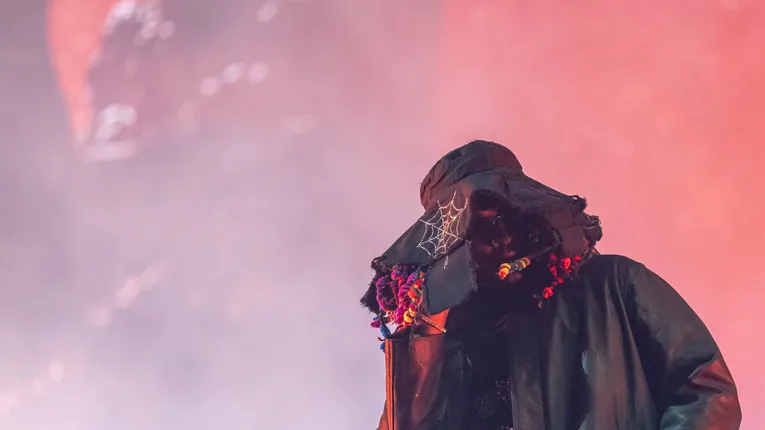
Young Thug reconnected with a fan who sent him an unexpected message that helped him stay connected to those closest to him while he was in Fulton County Jail.
The rapper spent several years in jail waiting for his YSL RICO trial, a time filled with uncertainty and few chances to talk to friends and family. Young Thug ultimately signed a plea deal that released him from jail and placed him on 15 years’ probation.
But communication remained a major challenge in the initial months of his detention. Young Thug’s ability to communicate with the outside world was limited, and the question remained who his co defendants were and how their individual legal choices would affect his defense.
About six months after Young Thug entered Fulton County Jail, one fan figured out how to send a message to his iPad. According to Thugger Daily on X, the rapper was stunned by the unexpected message.
That moment recently came full circle when the fan got a meet-and-greet with Young Thug on Monday. Thugger Daily proved he hadn’t forgotten the one who managed to find her way to him during such a difficult time, when the rapper learned her name and knew it was her.
Read More: A$AP Rocky back in Stockholm as “Don’t Be Dumb” tour hits Sweden
Young Thug’s connection grew from a simple message from a fan into something meaningful. It was difficult to contact loved ones back then, so this unexpected contact became a way for him to stay in touch with the people who mattered most to him.
Young Thug is now out of jail and back to work, touring the United States with his YSL roster. The recent meet-and-greet gave him a chance to reconnect with someone who had been there for him during one of the most uncertain periods of his life.
Celebrity
A$AP Rocky back in Stockholm as “Don’t Be Dumb” tour hits Sweden
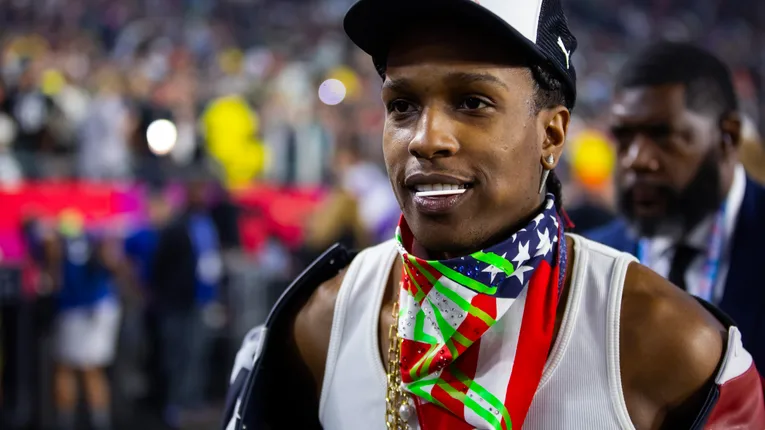
A$AP Rocky has returned to Sweden, bringing his “Don’t Be Dumb” world tour to Stockholm, years after the city became inseparable from one of the most difficult stretches of his career. The artist will be in Stockholm on Monday as part of his ongoing international tour. The visit is significant because of what transpired in Sweden in 2019, when Rocky was arrested and held for nearly a month following an alleged fight.
The incident was a big deal at the time and even drew comments from then-President Donald Trump, who publicly said Rocky should come home. The story became a big one for the rapper, and when he returned to Sweden years later, it was a notable moment on his latest tour.
An artist who had been through such a difficult situation in a country would have easily ruled out returning. Instead, Stockholm is now just another stop on the tour Rocky has been on, playing to large crowds in markets worldwide.
Read More: DJ Akademiks Opens the Door to Pusha T Amidst Drake Controversy
The response to the tour shows the continued demand for Rocky’s live shows. The tour has built momentum on sold out crowds across North America, and the European dates are carrying that momentum to an international audience.
His Stockholm show is also part of a wider year of major touring activity in rap. Don Toliver and J. Cole have also drawn solid crowds on their respective tours, further proving that live performance remains a key tie between hip-hop artists and fans.
For A$AP Rocky, his appearance in Sweden isn’t just another stop on the “Don’t Be Dumb” tour but a return to a place that has played an unusually memorable role in his career. Rocky’s Stockholm stop is yet another chapter in a year defined by new music, major touring, and strong audience support, as the European leg is underway.

-

 Artist Spotlight6 days ago
Amanda Fagan unveils lost love and regret on latest release “Forever Yearn”
-

 Artist Spotlight2 days ago
“NO MORE” by Amanda Holley connects healing, awakening, and survival
-

 Artist Spotlight2 days ago
“Subterranean Homesick Blues” finds a new direction through Ghost of Panama
-

 Artist Spotlight2 days ago
Lisa Jo draws a line under the past with latest release “Done Druggin’ Away the Pain”
-
 Artist Spotlight2 days ago
Crooner Ed captures a sweet romantic moment on “I Love This View”
-

 Artist Spotlight2 days ago
Seun Kuti & Egypt 80 bring a restless groove on latest release “DJB”
-

 Celebrity1 day ago
Glasses Malone Criticizes P-Lo Over Drake Collaboration Amidst Lamar Feud
-
 Celebrity1 day ago
Lil Durk Co Defendants OTF Dede and David Lindsey Seek Acquittal and New Trial
Guest
October 9, 2023 at 3:08 am
The Weeknd’s “High For This” is a product that aims to resonate with the youth. Its lyrics, beats, and overall production are tailored to appeal to younger audiences, particularly those who appreciate contemporary R&B and pop music. The song’s themes may revolve around experiences and emotions common in youth, making it a relatable piece for its intended demographic. Overall, it’s a testament to The Weeknd’s ability to connect with audiences through his music.