
Album Review
“Milky Way Rising” by Hourstone
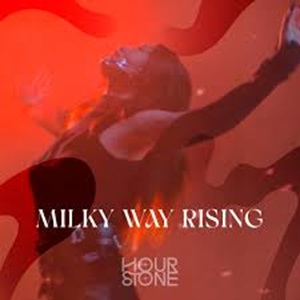
When it comes to making pop music that isn’t all about the tired stereotypes that have driven so many of its most ardent supporters away from the genre, few do it better than Hourstone does. The solo artist and frequent indie collaborator has been cutting some magnetic music in the last few years, and in his most recent effort “Milky Way Rising” featuring none other than the talented Amanda Kang, he arguably goes bigger than ever. Conceptually speaking, Hourstone is determined to expand on a fluid style of arranging introduced to us in previous releases by incorporating additional elements of instrumentation into the fabric of his sound, rendering what can only be described as a new strain of techno-inspired pop that is as rooted in balladry as it is an old school club beats.
With Kang by his side to emotionally colorize the lyrics in the song, this player tears through the rhythm of the track with a swagger that is unlike anything we’ve heard from him before, proving himself to be one of the most confident and charismatic performers of his currently-exploding scene along the way.
Produced with exquisite attention to detail, Hourstone ensures that every intricate facet within the tonality of the music is given VIP treatment behind the soundboard in the song. Every part of the mix is contributing to the larger narrative in “Milky Way Rising,” starting with the soothing radiance of the synth-born melody chasing the bassline in the background.
It helps to keep the intensity in Amanda Kang’s sensuous lyrics firing on all cylinders by breaking down some of the ominousness in the beats, but moreover, it adds a layer of melancholic undertow to the mood in the verses that wouldn’t be there otherwise. When Kang takes over the epicenter of the groove, the bass is toned down a bit, and the space that it leaves behind in the master mix is quickly filled by an exotic serenade which is as much of a reason to pick up “Milky Way Rising” as Hourstone’s definitively clever arranging is.
If you’ve yet to hear the music of Hourstone, this single is an optimal way to familiarize yourself with his skill set and the enthralling charm that he tends to unleash in every track that he shares with the public. I’ve been keeping a close eye on his career for a minute now, and I must say that, while I was expecting a lot out of this song, I never anticipated being as enamored by the highly stylized cosmetics of either as I was. The concept for “Milky Way Rising” is, much like the single itself, a kaleidoscopic effort from all angles that focuses on the might of its melody more than anything else. Neither Hourstone nor Amada Kang have submitted anything of a subpar quality to the fans to date, and with “Milky Way Rising,” this pair takes an evolving sound to a level of engagement that I cannot wait to hear a lot more of shortly.
Bethany Page








Album Review
Cognitive Constellation Corps blurs humanity and technology on “Thank You for Your Feedback (I)” album

In a world of notifications and automated responses, algorithms, and feedback requests, Cognitive Constellation Corps finds something unexpectedly human inside the machinery. “Thank You for Your Feedback (I)” is an alt-pop exploration of connection, isolation, communication, and the increasingly complicated relationship between people and technology, transforming familiar procedural language into something else.
Created by Brooke Tamsin Clevenger, a Belfast-based artist, the project’s principal composer, lyricist, producer, and conceptual director, the album is deliberately constructed around what happens to human emotion when our lives are increasingly structured by systems that process information rather than necessarily understand feelings. The album opens with “Opening Loop (i),” which introduces that world through the idea of repetition, linking software loops to the habits we humans learn in modern life.
Followed by “Signal Received (i),” the track becomes more fragile, a mix of bubbling electronic movement and the promise of waiting for a response. It picks up the strange emotional weight that can be behind something as simple as a digital signal. “Thank You For Your Feedback (i)” examines the pressure to be constantly evaluated, and “Echo Chamber (i)” reflects on how digital interaction creates intimacy and amplifies alienation. “The Curve of Clarity (i)” is a road toward understanding where data and human realization begin to converge.
On the production side, the project explores electronic textures without allowing its technological concept to overwhelm its emotional core. “Threadbare, Threadshare (i)” turns the fatigue of constant communication into an interesting concept. “The Response Loop (You’re Still Talking)” injects a sense of urgency with a faster, more club-friendly beat that mixes early-80s electronic music with state-of-the-art sounds.
“Harmonic Distortion (i)” continues the album’s obsession with emotion that has been filtered, and “Always (i) [Sevahem]” is an appropriate closer, reflecting on organic feeling and ancient human knowledge through the prism of digital sound. “Thank you for Your Feedback” is a tech-driven concept that is always aware of the person behind the screen. Cognitive Constellation Corps is cerebral and electronic and conceptually ambitious while remaining emotionally accessible.
Album Review
With “The Rhythm of Mandolay” album, Eye Travel finds beauty in the space between memory, melodies, and moments

With “The Rhythm of Mandolay,” Gothenburg singer-songwriter Christoffer Andersson, known from his musical project Eye Travel, reveals a deeply personal world. It is an 11-track album forged in time, reflection, and creative discovery and a crossroads between past and present.
The project was recorded with Charles Storm at the Cloudchamber studio on the island of Hisingen, and it turns individual songs into a linked collection where raw emotion, acoustic beauty, and vintage influences coexist. The album kicks off with “Holly,” a dramatic opener built on an Omnichord foundation and expressive vocals that have a theatrical quality. Next up is “Birdsong,” a more delicate affair with breezy melodies that recall the charms of 90’s pop.
For “Verona,” Eye Travel strips everything back and creates an intimate acoustic moment that captures feelings of distance and quiet longing. “Going Under” takes a different direction, using heavy Moog bass and lush string and flute arrangements to create a boisterous, vintage-inspired sound with lots of movement. Meanwhile, “This Planet” takes a bright, catchy pop approach that brings a playful energy, and “Beech Street” is a warm, reflective acoustic folk-pop memory trip.
“Castle” slows the pace to a gentle European folk feel, establishing an intimate, personal atmosphere. “Scientia” is a nicely placed instrumental lullaby that helps the album flow, and “Surface” is a quick but poignant glimpse of a fleeting feeling. “Pauline” is one of the album’s most powerful moments, a grand, emotional performance that captures its drama.
The last song on the album, “Comforting Hell,” leaves a bittersweet taste, exploring the tricky places where sadness and comfort can coexist. “The Rhythm of Mandolay” is an album carefully constructed on the rhythm of contrast. Eye Travel delivers a timeless record that is so very human, drawing on vintage influences, acoustic storytelling, and emotional honesty.
Connect – FB

-
 Artist Spotlight6 days ago
Burd & Keyz celebrates a new chapter through hip-hop on latest release “Miracles”
-
 Artist Spotlight6 days ago
ALEXATOR turns electric guitars and synths into pure energy with latest release “Through the Fire”
-

 Artist Spotlight6 days ago
ELISA MINELLI offers courage in your own hands with latest release “Grab Your Guitar”
-

 Artist Spotlight4 days ago
iLLLACAT brings sharp bars and catchy production with latest release “Like Dat”
-

 Artist Spotlight6 days ago
Eylsia creates an electronic energy on latest release “Music in My Mind”
-
 Artist Spotlight4 days ago
Joshua Jamison unveils intimacy and a full rock expression on latest release “Windows”
-
 Artist Spotlight6 days ago
Karate Boogaloo proves simple riffs still hit hard on latest release “Down Home”
-

 Artist Spotlight4 days ago
ALPHA CENTAURI blends hip-hop, funk and afrobeat ambition on latest release “The Future Right Now”