
Album Review
Wastelander’s New Album “What is Left of Me”

From the poetic folk-rock rundown that we encounter in “Get Older” to the more eclectic feel of “Room Full of Elephants,” the pastoral qualities found in “Broken Leg,” and simplistic melodicism of the rather rousing “Never Trust a Man,” there’s scarcely a moment in Wastelander’s new album What is Left of Me where veteran singer/songwriter Cooper Formant doesn’t sound completely at ease in the recording studio. It can be said that he’s turned in some quality work before now, I think that this latest effort might just be the most confident he’s ever sounded. Under the Wastelander moniker, Formant goes out of his way to reject the filler that many in his age group have come to lean on when crafting a new album, instead favoring a concept that gets back to the basics of folk-rock rhythms and haunting new school harmonies while still allowing himself to explore his depth as a songwriter and arranger. The aptly titled What is Left of Me covers a lot of ground both emotionally and artistically, and I think it’s this player’s most intriguing work to date.
The tempo is as expressive as any of the melodies are in “I Just Want to Be Your Friend (featuring Erin Rae),” the mildly restless “Figure it Out,” superbly paced “Caduceus” and the churning yet wistful “Be Where (also with Rae),” and from where I sit, I think it was important to make it as prominent a feature in What is Left of Me as it wound up being. There’s a great warmth to the fretwork we find throughout this tracklist, and honestly, had the rhythm not been given a little extra panache from Formant, I’m not sure that this record would feel as multidimensional and versatile as it does in this particular instance. Formant’s vocal is challenged for authority over the harmony in “Natural Light” and the similarly absorbing “Get it Right,” but even when the backing instrumentation is giving him a serious run for his money, I don’t believe there’s ever a moment in this LP where he isn’t sounding like the true star of the show from top to bottom. What is Left of Me sports a terrific production quality, but it’s clear to me that all twelve of its obstinate songs would likely sound just as charming in a stripped-down arrangement as they do here.
If what I’m hearing in this latest release from Cooper Formant is essentially just a taste of what he’s planning on filling this unfolding chapter in his career with, then I think it would be safe for his fans and critics to assume that he’s far from finished as a singer/songwriter. Formant has magnificent energy and enthusiasm in this album that is reminiscent of some of the best singers to pick up a guitar, and if he’s able to bring the same trademark tonality he’s injected songs like the title cut and “As You See” with here, I believe he’s going to see a lot more success on the mainstream side of the industry than he has in previous outings in bands like the Fluids. He’s not necessarily breaking any rules in What is Left of Me, but he’s signifying some outstanding consistency as an artist.
Christian Gardenhire










Album Review
Cognitive Constellation Corps blurs humanity and technology on “Thank You for Your Feedback (I)” album

In a world of notifications and automated responses, algorithms, and feedback requests, Cognitive Constellation Corps finds something unexpectedly human inside the machinery. “Thank You for Your Feedback (I)” is an alt-pop exploration of connection, isolation, communication, and the increasingly complicated relationship between people and technology, transforming familiar procedural language into something else.
Created by Brooke Tamsin Clevenger, a Belfast-based artist, the project’s principal composer, lyricist, producer, and conceptual director, the album is deliberately constructed around what happens to human emotion when our lives are increasingly structured by systems that process information rather than necessarily understand feelings. The album opens with “Opening Loop (i),” which introduces that world through the idea of repetition, linking software loops to the habits we humans learn in modern life.
Followed by “Signal Received (i),” the track becomes more fragile, a mix of bubbling electronic movement and the promise of waiting for a response. It picks up the strange emotional weight that can be behind something as simple as a digital signal. “Thank You For Your Feedback (i)” examines the pressure to be constantly evaluated, and “Echo Chamber (i)” reflects on how digital interaction creates intimacy and amplifies alienation. “The Curve of Clarity (i)” is a road toward understanding where data and human realization begin to converge.
On the production side, the project explores electronic textures without allowing its technological concept to overwhelm its emotional core. “Threadbare, Threadshare (i)” turns the fatigue of constant communication into an interesting concept. “The Response Loop (You’re Still Talking)” injects a sense of urgency with a faster, more club-friendly beat that mixes early-80s electronic music with state-of-the-art sounds.
“Harmonic Distortion (i)” continues the album’s obsession with emotion that has been filtered, and “Always (i) [Sevahem]” is an appropriate closer, reflecting on organic feeling and ancient human knowledge through the prism of digital sound. “Thank you for Your Feedback” is a tech-driven concept that is always aware of the person behind the screen. Cognitive Constellation Corps is cerebral and electronic and conceptually ambitious while remaining emotionally accessible.
Album Review
With “The Rhythm of Mandolay” album, Eye Travel finds beauty in the space between memory, melodies, and moments
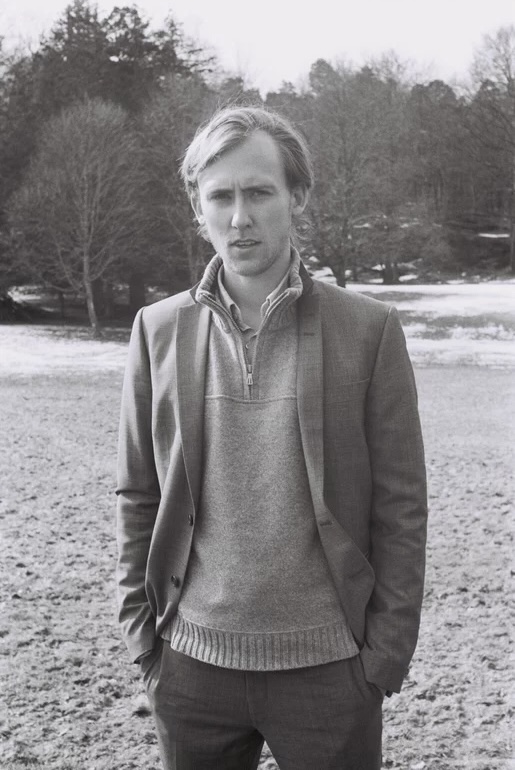
With “The Rhythm of Mandolay,” Gothenburg singer-songwriter Christoffer Andersson, known from his musical project Eye Travel, reveals a deeply personal world. It is an 11-track album forged in time, reflection, and creative discovery and a crossroads between past and present.
The project was recorded with Charles Storm at the Cloudchamber studio on the island of Hisingen, and it turns individual songs into a linked collection where raw emotion, acoustic beauty, and vintage influences coexist. The album kicks off with “Holly,” a dramatic opener built on an Omnichord foundation and expressive vocals that have a theatrical quality. Next up is “Birdsong,” a more delicate affair with breezy melodies that recall the charms of 90’s pop.
For “Verona,” Eye Travel strips everything back and creates an intimate acoustic moment that captures feelings of distance and quiet longing. “Going Under” takes a different direction, using heavy Moog bass and lush string and flute arrangements to create a boisterous, vintage-inspired sound with lots of movement. Meanwhile, “This Planet” takes a bright, catchy pop approach that brings a playful energy, and “Beech Street” is a warm, reflective acoustic folk-pop memory trip.
“Castle” slows the pace to a gentle European folk feel, establishing an intimate, personal atmosphere. “Scientia” is a nicely placed instrumental lullaby that helps the album flow, and “Surface” is a quick but poignant glimpse of a fleeting feeling. “Pauline” is one of the album’s most powerful moments, a grand, emotional performance that captures its drama.
The last song on the album, “Comforting Hell,” leaves a bittersweet taste, exploring the tricky places where sadness and comfort can coexist. “The Rhythm of Mandolay” is an album carefully constructed on the rhythm of contrast. Eye Travel delivers a timeless record that is so very human, drawing on vintage influences, acoustic storytelling, and emotional honesty.
Connect – FB

-

 Artist Spotlight5 days ago
Burd & Keyz celebrates a new chapter through hip-hop on latest release “Miracles”
-
 Artist Spotlight5 days ago
ELISA MINELLI offers courage in your own hands with latest release “Grab Your Guitar”
-
 Artist Spotlight5 days ago
ALEXATOR turns electric guitars and synths into pure energy with latest release “Through the Fire”
-

 Artist Spotlight5 days ago
Eylsia creates an electronic energy on latest release “Music in My Mind”
-
 Artist Spotlight5 days ago
Karate Boogaloo proves simple riffs still hit hard on latest release “Down Home”
-

 Artist Spotlight3 days ago
iLLLACAT brings sharp bars and catchy production with latest release “Like Dat”
-
 Artist Spotlight3 days ago
Joshua Jamison unveils intimacy and a full rock expression on latest release “Windows”
-

 Artist Spotlight3 days ago
ALPHA CENTAURI blends hip-hop, funk and afrobeat ambition on latest release “The Future Right Now”